Help with checking BG!

Status
Not open for further replies.

Casey1769

Member Since 2020
My sugar baby, nugget does NOT like me trying to check his BG.. I’m also new at it and I’m just looking for some tips on it.. he was diagnosed about a year and half ago and my vet never mentioned home testing but I’ve been seeing a lot about it and I’m starting to do it, due to the vet not being trustworthy towards me. I managed to get a prick in his ear last night and this morning (64 and 75) around the sweet spot after countless times.. he’s ran, clawed and jerked everytime to where it’s ripped his ear a few.. today I tried using the lancet device and also no luck so I just gave it a break to prevent anymore damage...any tips?
 
Hi Casey,

It's great that you're taking the plunge with home testing. :) Well done for getting those readings under such challenging conditions!

Can you please let us know:

* which insulin you're using.

* what dose Nugget is currently on.

* whether you're using a human or a pet meter.

* how many hours after you gave the insulin dose(s) you got those two readings.

I'll post again shortly with some tips and suggestions which will hopefully give you some ideas to help with the testing side of things.


Mogs
.
 
I’m using prozinc, 1/2 a unit twice daily since the vet said at the last visit, 2 months ago to cut him down because he could be going into remission soon. I’m using a human meter, Relion prime. I checked his levels before administering his insulin and they were low/normal so he hasn’t had his insulin in 12 hours and seems a lot happier and healthier honestly..
 
As promised:

Home testing links and tips

Testing and injection tips

The following video has some very helpful desensitisation techniques:


Although the video focuses on giving injections the techniques can also be applied to home testing.

It helps to pick a single location, ideally one with good lighting, and only test in that place. Keep bringing Nugget to the testing station several times a day and just give treats, fusses and praise. When you need a reading try to get the test done. The idea is to get Nugget to associate the testing station with mostly nice things happening but also that he gets the ear poke sometimes.


Mogs
.
 
I’m using prozinc, 1/2 a unit twice daily since the vet said at the last visit, 2 months ago to cut him down because he could be going into remission soon. I’m using a human meter, Relion prime. I checked his levels before administering his insulin and they were low/normal so he hasn’t had his insulin in 12 hours and seems a lot happier and healthier honestly..
Thanks for getting back with this so quickly, Casey. I asked for this information because the test results you posted are in a very good range indeed so much caution is needed with the insulin, and it's good to hear you're on top of things in this regard. :)

I hope the above links help you because, with Nugget running in such a good range, being able to find out where his BG is at is even more important for safety.

I've not used Prozinc myself so I'm tagging @Panic to ask her to look in on you two and perhaps give you some more specific pointers about your insulin and how to manage things when a kitty looks to be heading toward remission (fingers and paws crossed!).


Mogs
.
 
Here is the testing method I used. Perhaps it might give you some ideas to add to your own testing technique.
  1. For most meters you can insert a test strip part way without switching it on. Once you've done the poke you can then push the strip the rest of the way into the meter to activate it. (Reduces the likelihood that the meter will time out before you can get the blood sample onto the strip.)

  2. Fold a sheet of kitchen paper in four lengthwise and cut it up into 1" strips. You will use these to cushion and support the ear during the test.

  3. Apply a thin film of Vaseline or Neosporin ointment (not the cream!) onto the edge of the ear to help the blood sample bead up instead of wicking into the fur. (Wipe off any excess.)

  4. To get a blood sample you need to increase the blood flow to the ear, so make sure the ear is really, really, really warm (but not hot) - especially in the early days of testing. (Note: With repeated 'poking', more capillaries form in the test area, so it becomes easier to get samples reliably.)

  5. Once you have the testing area of the ear well warmed, wrap a strip of folded kitchen paper round your index finger then place finger under the sweet spot area of the ear you're testing to support it during the poke.

  6. Use your thumb and middle finger to lightly but firmly grip the ear and paper strip in place so that the edge of the ear is taut but not overstretched; the little bit of tension will make it easier for the lancet to break the skin surface (and it helps to keep kitty's head from moving around too much).

  7. When using a lancet 'freehand', make sure the bevelled side of the lancet is facing upwards. Hold the lancet at a slight angle to the ear similar to the way you hold a pen when writing, not perpendicular (easier to see where you're aiming and also makes skin prick easier).

  8. When it comes to the actual poke, prick the sweet spot on the edge of the ear in a similar way to how you might quickly prick a balloon with the tip of a needle to make it pop. If you aim as close to the edge of the ear as possible you are less likely to hit the marginal ear vein.

  9. Keep hold of the ear while you're pushing the test strip into the meter to activate it. (Kitties are prone to shake their heads after a poke, sending your precious blood sample flying across the room. Holding the ear reduces likelihood of this happening.)

    Note: As you become more practised in testing, you'll be able to activate the meter just before doing the poke and still have plenty of time to collect the sample on the strip before it times out.

  10. When using the glucometer, bring the test strip to where it j-u-s-t comes into contact with the blood droplet and hold it there. The strip should then 'sip up' the amount it needs to run a valid test. Most meters beep or give a visual cue to let you know that enough blood has been collected on the strip.

    If your cat is a wriggler, try collecting the blood sample on the back of your (clean) fingernail and test it from there.

    If a test fails and you still have a lot of blood on the strip from the failed test, don't throw it away. Instead, you could pop another strip into the meter and test using the blood on the strip from the first test. (Saves an additional poke so also helpful for wriggly kitties!)

  11. After the test, fold the paper strip over the edge of the ear and apply gentle pressure to the test area for about 20-30 seconds to minimise bruising.

  12. Keep giving lots of praise throughout the process and reward with a favourite diabetic-friendly treat or favourite activity (e.g. brushing).
Here's a helpful diagram of the testing 'sweet spot':


PP9t8h5YHfH4QHyzqWJdRJDtu95CbV4iGsi7TdNufkompapc9z8bYX81s1V0zqXNVHQHJ0DlWFn-ftQifcAXo3LjOOTJff0nQd9NOphX53EGP3WXzwsMdGc0nHYXWDKB9imWHJNb


Mogs
.
 
Last edited:
thank you very much!! I finally got a good prick in on his ear, his BG was 54 tonight before dinner.. what’re the good and bad levels exactly? I see so many different ranges. But this is his second night without insulin! He’s doing really good, actually playing and giving me the time of day!
 

Attachments

  • 61218FCF-8ACF-4482-8532-B0B171FA1130.jpeg
    61218FCF-8ACF-4482-8532-B0B171FA1130.jpeg
    36.4 KB · Views: 142
Good job in getting a test.
Just a couple of other things I found helpful was to give the cat a broken up freeze dried chicken treat for distraction.

After you poke the ear, “scoop” up the blood droplet on the top of your thumbnail or use a credit card to hold the blood drop then the cat doesn’t have to hold still any longer than necessary. Test the blood droplet from your nail/credit card.

For interpreting numbers, you can take a look at the spreadsheets in a person’s signature line. The goal is to stay in the “green zone”. Lime is too low and Black is too high.
 
I finally got a good prick in on his ear, his BG was 54 tonight before dinner
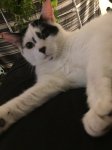
Nice one, Casey! Nice BG too! Thanks for letting us know how you got on. Love Nugget's markings. :cat:

what’re the good and bad levels exactly? I
As measured on a human meter, the normal feline BG reference range is 50-120mg/dL.

For a kitty who is a candidate for becoming a diet-controlled diabetic, before attempting a remission trial the 'ideal' plan is to taper the insulin dose down to 0.1IU and have the cat stay in the 50-99 range (or, better again, 50-80) with only an occasional reading in the 100-120 range. At that stage insulin treatment is suspended and the cat's BG is monitored for a fortnight to see how it responds.

Then life happens. And cats don't read the manual. ;)

My understanding is that it can be tricky for some cats on Prozinc to stay pretty much in the 'safe green' range all the time, even on a tiny dose of insulin so there may be cases where the kitty will start a remission trial with a few more 'blues' in their daily readings (in the hope that the cat will drift down naturally into the green range over the 14 days). And then there are kitties who seem to be in rather a hurry to get off insulin, and perhaps Nugget might be one of them. The clinical signs you report are really promising, and it's great to hear he's feeling good and is happy in himself. (((Nugget)))

For now, please can you keep testing at AM and PM preshot times at minimum, even though you may not need to give any insulin. You're looking to see Nugget test in the safe greens (50-99), but an occasional reading in the 100-120 range is fine. Grabbing spot checks in the hours immediately after Nugget has his feeds will throw light on how well his pancreas is functioning at mealtimes. If you had a mind to, it would be really helpful to yourself and to members replying to your posts if you could record the readings in one of our shareable spreadsheets. When we can see the data 'at a glance' it helps us make better suggestions, and the (automatic) colour coding will help you get a better feel for the range Nugget is running in. Here's the info you need to set one up:

FDMB spreadsheet instructions

Understanding the spreadsheet grid

If you'd like help getting a spreadsheet started, just give a shout and we'll find someone to help you.

I'm going to tag a few experienced Prozinc users to ask them to give you specific pointers on running a remission trial when using this insulin.

@Deb & Wink
@JanetNJ
@Panic

Also, the Prozinc board on this forum is quite active so have a look there as well.

That 54 with no insulin at all is really good. :cat: Fingers and paws crossed... :nailbiting:


Mogs
.
 
Last edited:
Nice one, Casey! Nice BG too! Thanks for letting us know how you got on. Love Nugget's markings. :cat:


As measured on a human meter, the normal feline BG reference range is 50-120mg/dL.

For a kitty who is a candidate for becoming a diet-controlled diabetic, before attempting a remission trial the 'ideal' plan is to taper the insulin dose down to 0.1IU and have the cat stay in the 50-99 range (or, better again, 50-80) with only an occasional reading in the 100-120 range. At that stage insulin treatment is suspended and the cat's BG is monitored for a fortnight to see how it responds.

Then life happens. And cats don't read the manual. ;)

My understanding is that it can be tricky for some cats on Prozinc to stay pretty much in the 'safe green' range all the time, even on a tiny dose of insulin so there may be cases where the kitty will start a remission trial with a few more 'blues' in their daily readings (in the hope that the cat will drift down naturally into the green range over the 14 days). And then there are kitties who seem to be in rather a hurry to get off insulin, and perhaps Nugget might be one of them. The clinical signs you report are really promising, and it's great to hear he's feeling good and is happy in himself. (((Nugget)))

For now, please can you keep testing at AM and PM preshot times test at minimum, even though you may not need to give any insulin. You're looking to see Nugget test in the safe greens (50-99), but an occasional reading in the 100-120 range is fine. Grabbing spot checks in the hours immediately after Nugget has his feeds will throw light on how well his pancreas is functioning at mealtimes. If you had a mind to, it would be really helpful to yourself and to members replying to your posts if you could record the readings in one of our shareable spreadsheets. When we can see the data 'at a glance' it helps us make better suggestions, and the (automatic) colour coding will help you get a better feel for the range Nugget is running in. Here's the info you need to set one up:

FDMB spreadsheet instructions

Understanding the spreadsheet grid

If you'd like help getting a spreadsheet started, just give a shout and we'll find someone to help you

I'm going to tag a few experienced Prozinc users to ask them to give you specific pointers on running a remission trial when using this insulin.

@Deb & Wink
@JanetNJ
@Panic

Also, the Prozinc board on this forum is quite active so have a look there as well.

That 54 with no insulin at all is really good. :cat: Fingers and paws crossed... :nailbiting:


Mogs
.
 
FYI, the 54 (human meter) is fine when a kitty's not got any injected insulin in its system.

If a cat were to hit 54 while a dose was active in its system - particularly when it's during the period of peak effect - that's when you'd start feeding small amounts of the kitty's regular low carb to keep the BG above 50 and you'd test every 30 minutes to make sure they don't drop lower. (See the hypo guide for what to do if numbers were to go below 50.)


Mogs
.
 
Thank you! And yes a little, I think I hit the vein a little.. but he was really good this morning. So you do think I should give him any insulin or just give him it when it gets high?
 
Thank you! And yes a little, I think I hit the vein a little.. but he was really good this morning.
We've all done that, but it gets better with practice. Try to aim the tip of the lancet as close to the edge of the ear as you can, as this will reduce the chance of hitting the marginal ear vein.

Be sure to apply gentle pressure to the test area for about 20-30 seconds after the poke to stem the bleeding and minimise bruising.
So you do think I should give him any insulin or just give him it when it gets high?
For what little I know of Prozinc and with only very little data to work with, I would not give any insulin with the numbers you're seeing at the moment, Casey.

If Nugget does start trending upwards, I'd strongly recommend that you post for Prozinc dosing advice before giving any insulin. Even if the reading is over 120, it might just be a one-off and Nugget's next readings could potentially be back squarely in the normal range again. You need to look at the trend, not a single standalone test result, when making decisions about the insulin. An extra-cautious and conservative approach is needed for safety when a cat looks like it might be entering remission (anti-jinx!).

Here is some general guidance from the FDMB Prozinc Dosing Methods sticky:

How to handle a lower than normal preshot number when following SLGS:

Until you collect enough data to know how your cat will react, we suggest following the guidelines in the FDMB's FAQ Q4.4:
Q4.4. My cat's pre-shot level was way below the usual value. Should I give the injection?
A4.4. There's no hard and fast rule, but if you don't have data on how your cat responds to insulin, here are some general guidelines.

  • Below 150 mg/dl (8.3 mmol/L), don't give insulin.
  • Between 150 and 200 (8.3-11.1 mmol/L), you have three options:
    • a.) give nothing
    • b.) give a token dose (10-25% of the usual dose)
    • c.) feed as usual, test in a couple of hours, and make a decision based on that value
  • Above 200 (11.1 mmol/L) but below the cat's normal pre-shot value, a reduced dose might be wise.
  • In all cases, if you are reducing or eliminating insulin, it's wise to check for ketones in the urine.
  • Above the normal pre-shot value, give the usual dose, but if the pre-shot value is consistently elevated, it's a good idea to schedule a full glucose curve to see whether a change in dose or insulin is appropriate. In most cases, the target "peak" value should not be below 100 mg/dl (5.6 mmol/L), and for some cats it might be higher.
[Emphasis mine]

I'm sorry I can't offer more specific suggestions but I've not used Prozinc so I don't have knowledge of the niceties that come with experience of its use.


Mogs
.
 
A lot goes into caring for a sugar cat. It's important to acknowledge all that love and care and to celebrate when a kitty is doing well as a result! :cat: It's also inspiring for other kitties and their caregivers to hear good news. :)

(((Casey and Nugget)))


Mogs
.
 
If you need help creating that SS (spreadsheet), in our standardized format, and the instructions aren't helping. Let us know. We have several people that will help you set up the SS.

Once the SS is setup, it's much, much easier for us to follow along with what is happening with your cat, and we can make better recommendations on next steps.

Right now, I would not give your cat Nugget any insulin with low BG readings like you are getting.

OTJ Trial Guidelines (These are the criteria we use when following an OTJ Trial.) (OTJ means off-the-juice)

Here are the instructions for an OTJ trial: If on Lantus or Levimir, depot has to drain first before trial starts, about 3 days or 6 cycles. No depot with in and out type insulins (NPH, Vetsulin/Caninsulin, Prozinc). The trial starts when numbers are in the range of a healthy cat (50 - 80 mg/dL), but under 100 overall... with only occasional readings in the 100 - 120 range. Start the trial on the next green pre shot.

If you are posting in the Lantus/Levimir forum, please start a new thread each day which says ‘[Cat name] OTJ trial Day 1 BG xx’ (where xx is the BG reading for that cycle PM), then day2,3 etc. If you are posting in the Main Forum, we don’t require you or need you to do that separate post for each day. In fact, if you have never posted before over in the Lantus/Levimir forum or use a different insulin, you are fine staying in the Feline Health (Welcome & Main Forum). Or in the specific ISG (Insulin Support Group) for your insulin. We’ll cheer you on!

1. Test at your normal AMPS and PMPS times. Remember, you want a 2 hour fast before those AMPS and PMPS test times. Feed multiple small meals throughout the day as much as possible (small meals are less likely to overwhelm a newly functioning pancreas). The morning test is now called the AMBG. The evening test is now called the PMBG.

2. If your cat is green (0-99 mg/dL human meter, 0-130 mg/dL pet meter, 0-5.5 mmol/L) at your normal test times, no need to test further until the next "PS" time, just feed small meals and go about your day. If the numbers are blue or higher (100-199 human meter, 130-230 pet meter, 5.5-11 mmol/L), feed a small meal and test again after about 3 hours. Food raises BG's. So if the number is lower 3-4 hours after a meal, then the pancreas is working!

3. Your cat may have a sporadic blue number. Don't panic but post before you decide whether to shoot so we can have a discussion.

4. After 2 weeks, 14 full days, if everything is looking good, we have a party!

Sometimes, the trial doesn't work the first time and we have to give a little more support by starting the cat with a tiny dose of insulin again. I had to do that with Wink. We simply start the cat back on a tiny dose of insulin to support the pancreas with healing for a bit longer. Our goal is a strong remission and it's better to be safe now then sorry later that you rushed it. With just a little more time we will probably get that strong remission we are looking for.
 
If you need help creating that SS (spreadsheet), in our standardized format, and the instructions aren't helping. Let us know. We have several people that will help you set up the SS.

Once the SS is setup, it's much, much easier for us to follow along with what is happening with your cat, and we can make better recommendations on next steps.

Right now, I would not give your cat Nugget any insulin with low BG readings like you are getting.

OTJ Trial Guidelines (These are the criteria we use when following an OTJ Trial.) (OTJ means off-the-juice)

Here are the instructions for an OTJ trial: If on Lantus or Levimir, depot has to drain first before trial starts, about 3 days or 6 cycles. No depot with in and out type insulins (NPH, Vetsulin/Caninsulin, Prozinc). The trial starts when numbers are in the range of a healthy cat (50 - 80 mg/dL), but under 100 overall... with only occasional readings in the 100 - 120 range. Start the trial on the next green pre shot.

If you are posting in the Lantus/Levimir forum, please start a new thread each day which says ‘[Cat name] OTJ trial Day 1 BG xx’ (where xx is the BG reading for that cycle PM), then day2,3 etc. If you are posting in the Main Forum, we don’t require you or need you to do that separate post for each day. In fact, if you have never posted before over in the Lantus/Levimir forum or use a different insulin, you are fine staying in the Feline Health (Welcome & Main Forum). Or in the specific ISG (Insulin Support Group) for your insulin. We’ll cheer you on!

1. Test at your normal AMPS and PMPS times. Remember, you want a 2 hour fast before those AMPS and PMPS test times. Feed multiple small meals throughout the day as much as possible (small meals are less likely to overwhelm a newly functioning pancreas). The morning test is now called the AMBG. The evening test is now called the PMBG.

2. If your cat is green (0-99 mg/dL human meter, 0-130 mg/dL pet meter, 0-5.5 mmol/L) at your normal test times, no need to test further until the next "PS" time, just feed small meals and go about your day. If the numbers are blue or higher (100-199 human meter, 130-230 pet meter, 5.5-11 mmol/L), feed a small meal and test again after about 3 hours. Food raises BG's. So if the number is lower 3-4 hours after a meal, then the pancreas is working!

3. Your cat may have a sporadic blue number. Don't panic but post before you decide whether to shoot so we can have a discussion.

4. After 2 weeks, 14 full days, if everything is looking good, we have a party!

Sometimes, the trial doesn't work the first time and we have to give a little more support by starting the cat with a tiny dose of insulin again. I had to do that with Wink. We simply start the cat back on a tiny dose of insulin to support the pancreas with healing for a bit longer. Our goal is a strong remission and it's better to be safe now then sorry later that you rushed it. With just a little more time we will probably get that strong remission we are looking for.
Thank you very much! So were on day three of the trial with normal numbers! I just downloaded chrome, drive and sheets so I’m going to try to figure it out but will reach out if there’s confusion.. I’ve been confused about it but it’s getting better now that I got the steps! I just put 0 units, if he’s not getting any insulin?
 
I just put 0 units, if he’s not getting any insulin?
Yes.
also I need help identifying SSGL and TR
Those are 2 of the insulin dosing methods we use.
SLGS stands for Start Low, Go Slow.
TR stands for Tight Regulation.
MPM stands for Modified Prozinc Method.
Custom means you are doing an individualized dosing method.

For now, saying SLGS on your SS at the top would be fine. Since you are on an OTJ trial, that is all you should need for now. Perhaps a note in the Remarks column over there on the right hand side, to say you started an OTJ trial would be good to see. It helps someone that is giving a quick glance at the SS, but has not had time to read through all your posts.

The SS looks good, and you got the permissions set up correctly so we have View Only access to the link in your User Id Signature. Good job!

This document explains more about the Prozinc dosing protocols or methods we use here.
Sticky PROZINC DOSING METHODS

There are other documents, or threads that explain some of the dosing methods for other insulins.
I don't think you need those documents right now. But if you want, someone can include a link to them for you.

We do add another tab for each year. The first post in this thread explains how to do that.
***2021 SPREADSHEETS—PLEASE READ and Keep Bumped***


Ooh! Pretty, pretty numbers! C'mon, Nugget! :cat:

Great job on getting Nugget's spreadsheet up and running, Casey. :)


Mogs
.
Thank you so much!! Another good number tonight, 67!!! I’m so glad I finally started checking his numbers instead of blind dosing like I was told for the past year and a half.. I feel so horrible for it but just never new until Facebook groups and you guys.
 
He’s doing awesome!! I haven’t seen this side of him in a long time.. happy, sweet and not trying to steal all the cat and dog food from my other fur babies! ❤️
Also he looks super goofy in this photo
 

Attachments

  • E2FCB184-A489-4186-8E1A-DA334EB2F3CF.jpeg
    E2FCB184-A489-4186-8E1A-DA334EB2F3CF.jpeg
    39.9 KB · Views: 126
I’m using the Relion lancing device with just the clear cap on it and I can get it exactly at the sweep spot.. any tips if you or anyone else knows about this lancing device?
If you are using a lancing device, placing it flat against the ear, with something on the other side to provide a firm backing to poke against can be helpful.

When freehanding the lancet, the bevel is pointed up, and the lancet gets poked into the ear at about a 45 degree angle.

So this makes day 4.5 on the OTJ trial. Very nice green numbers.

OTJ day 5 dancing turkeys.jpg
 

Attachments

  • OTJ day 5 dancing turkeys.jpg
    OTJ day 5 dancing turkeys.jpg
    8 KB · Views: 117
7 you say!?!?

Then this is a good cheering picture for Nugget on day 7 of the OTJ trial.
OTJ day 7 lucky 7 on fire.jpg
 

Attachments

  • OTJ day 7 lucky 7 on fire.jpg
    OTJ day 7 lucky 7 on fire.jpg
    5.4 KB · Views: 220
Status
Not open for further replies.
Back
Top