HELP? BS too high to register on meter

Status
Not open for further replies.

rozie99

Member Since 2012
We took in my grandma's untreated diabetic cat about 2 months ago. We've been trying to get him regulated and have made some rookie mistakes.

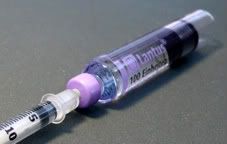
He's getting 4 units of Lantus 2x per day. We recently figured out that some of the fluctuation is likely due to using the pen- it was not giving the full 4 units, ever, when we did a few tests using a syringe to measure what it dispersed.

So we quit the 12 hour curve we were doing Sunday when we registered 563. Knowing Lantus is slow acting, but wanting to check- we tested tonight and the machine read "HI", which according to the book means it's over 600 and essentially too high to register.

Is this a medical emergency? He just had dinner and his evening insulin shot at 6:30 pm CST, was 9:39 pm CST when we took the reading.
He's acting just fine, purring and wandering around.

Many thanks in advance!!

Lori
 
Lori did you test him before he ate? I'm no expert here and 600 would give me some serious shakes but when my cat went back to being diabetic I think the first test I got with him was high 500's - everyone told me to watch him carefully - make sure he had water and test his urine for Ketones if I could (they sell strips at most larger drug stores). I'm hoping someone with more experience checks in soon, esp. with Lantus experience.

Maybe check him again? Sometimes if I get a huge blood droplet Robbie tests higher - and if he'd eating an hour or two before you tested some of that could be food.

oh, good Sue's here - I was going to try and get someone from Lantus but she is - OK hopefully help is on the way.
 
We feed him mostly wet, grain free food- Blue Buffalo. He does get the classic Fancy Feast too. He has a host of issues when we got him, and being very thin was one (10.2 lbs, should be around 15 as he's a large cat). He does have access to dry, since we have 12 others, and it's Royal Canin Intestinal HE.
 
We didn't test him before he ate today. Our vet tells us that it typically takes 2 weeks to see a real turnaround in blood sugar using Lantus since it's slow acting. We started doing a curve on Sunday:
6:30am- 402
9:50am- 363
12:30pm- 448
3:30- 563

So this was the first time we tested since realizing the Lantus pen wasn't working correctly.

I know the dangers of his sugars being too low- never worried about him getting higher and higher while getting insulin 2x daily. He's 16 and was completely untreated when we got him. We've seen marked improvements in many of his other issues (dandruff nearly gone, gained over 2 lbs, more alert and active)... but his blood sugar has been a bit of a roller coaster.
 
The Royal Canin is probably the cuplrit - all them are roughly 34%-ish. Most of us try to keep our foods below 10% to get them regulated. If you remove access to that, I'll bet you find a big drop. Takes about 3 days for dry food to work thru their systems.

GOOD LUCK!!! BIG Hug too!
 
How long has he been on lantus? And can you tell us his dose history as far as what the initial dose was, and how and when it was increased?
Carl
 
He did very well at first.
We got him at the end of April, and straight to my vet April 30- BS then was 520.
He came with another cat, and they were isolated from the herd of 11 others until the last week. She's a tad antisocial, so they had a screen door to their room to learn the other cats and socialize. He's pretty much always had access to the Royal Canin Intestinal HE (we have 1 with Inflammatory Bowel and 1 with struvite crystals, and this food works for everyone else. So we transitioned his roommate to this dry, and it was always in his room.

We started with 1 unit, 2x day. Recheck at vet every 2 weeks- which showed a steady lowering - and a 1 unit increase each visit, and got down to around 250.
Then we tested high, figured out the Lantus may have gone bad, and switched to the pens. 2 weeks later, still high- and then realized we weren't instructed by the pharmacist to keep the needle under the skin/ button on pen depressed. So we gave the shots as directed, then did a 12 hour curve, still high but highest was 450 or so. We kept doing the dose as directed, 4 units, and tried another curve 2 weeks later, this past Sunday, which were the results I posted above.
 
Only real difference is- he was fully released unsupervised into the general population a week ago.
He is so mellow, doesn't seem stressed at all.
We feed wet before each shot- 1/2 can (more if he'll eat it) at 6:30am and again with his evening shot (6:30pm). He also gets a small plate of wet before bed (typically 10pm), to reduce his temptation to eat dry overnight.
 
And to everyone that's trying to follow me and help me- a HUGE thank you. Once I get some experience, and can help others, I will be back reading posts to do the same. It's an amazing community of wonderful, caring and helpful folks you have here and you've helped me a couple times already. Thank you, thank you, thank you. :-)
 
1- rather than use the PEN to shot most of us buy syringes and use that. If you have to go up by less than a unit you cannot do that with the pen.

2- dry food is most likely the culprit. Sneakers can raise 200+ points on a dry kibble (ONE PIECE!!!) and stay high for days as she is so carb sensitive.

3- if you can transition all to wet that would be great. the IB might be allergic to something in the food you are feeding and teh crystals should go away once you aren't feeding dry candy all day and gets more water into the system on a normal and daily basis. That's what dry food is, really, candy- air filled candy for cats. They love it because of the flori flori put in it to make it yummy for cats.

4- Are you are home testing or using the vet? If you transition him off dry you need to keep an eye out for the drop and 4u of Lantus BID would probably be too much for him and that is by home testing and not done by office curves which can ALSO inflate at the vet because of stress.

Got to go, I'll check back in a few!

Good luck!
 
You also need to be checking daily, if not twice a day, for ketones. You can buy the ketosticks at any pharmacy- diabetic supplies- usually $7/50 strips.

With his numbers so high and the insulin a maybe you could be heading for a DKA (EXPENSIVE to treat) without even knowing it.

HMJ
 
Cats often receive increases in smaller increments than 1u. Because of this I think all of us use a syringe to draw out the dose from the pen. Below is some information on that (with pictures).

SYRINGES

Use U-100 syringes to draw insulin from Lantus and Levemir vials, Lantus OptiClik cartridges and SoloStar Pens, and Levemir FlexPens.

Draw the insulin from the rubber stopper on the end of the vial, cartridge, or pen.

(Left to Right) Lantus 3ml SoloStar Pen, Levemir 3ml FlexPen, and the Lantus 3ml Cartridge Refill for the OptiClik Pen:
4113.jpg

thanksgiving2008006-1-1-1.jpg

lantuscartdraw2-1.jpg


Most Lantus and Levemir users prefer using U-100 syringes marked with half units for ease in measuring.

You have received good advice and asked questions that will be helpful for others to guide you in this journey. So, I wont rehash anything until you are able to get back on the board and respond.

It's really kind of you to take in this cat. :mrgreen:
 
I just want to mention that 4u is a rather large dose, and it was raised too much, too quickly--so there's a chance already it is too much insulin (Lantus should be increased slowly in .25u-.5u increments), so please do NOT remove the dry food unless you are testing frequently and lowering the dose. Cats will see a 100-300 pt drop in BG levels once the dry food is gone, so that can lead to a dangerous hypoglycemic situation if you are still shooting a high dose like 4u. To put it in perspective, most cats on a low carb, canned diet with no dry food do not need much more than 1u of Lantus.

With Lantus, it's best to get at least 3 tests a day--once before each shot to see if it's safe to shoot insulin, and 1 or more mid-cycle checks to see how much the insulin is lowering blood glucose levels. Because cats' livers release glucose into their bloodstream to counteract low numbers (which can cause high blood glucose for up to 72 hours), unless you're getting those daily mid-cycle numbers, you don't know if you're giving too much or too little insulin.

Here's a link to the Lantus dosing protocol: http://www.uq.edu.au/ccah/docs/diabetesinfo/link4.pdf. I would print this out and bring it to your vet.
 
hmjohnston said:
You also need to be checking daily, if not twice a day, for ketones. You can buy the ketosticks at any pharmacy- diabetic supplies- usually $7/50 strips.

With his numbers so high and the insulin a maybe you could be heading for a DKA (EXPENSIVE to treat) without even knowing it.

HMJ

Can you tell me what a DKA is??

How do you use the home tests for ketones? I know they're strips for urine, but how to test? I'm not sure how we'd get a urine sample from him at home, because he refuses to use many kinds of litter so our normal trick of unpopped popcorn will not work with him.

We talked with the vet today, will test 2x per day before shots for a few days to see what's going on. We can't test midday, unfortunately, because my husband and I both work full time and not close enough to make the round trip in an hour with traffic over lunch. We may have to isolate him and they're contacting their Royal Canin rep to get carb counts on all varieties of Intestinal HE and research other food options. Regardless, we may be trying to figure out a feeding schedule for all 13... we also got his HESKA results back:
Allergic to so many things, we're not sure where to start. Grasses, weeds, trees (and here in Iowa, I can attest to the high pollen since I have many of those myself) as well as food reactions to rice, corn, soy, potato and barley.

Still trying to soak it all in... on the upside, Cricket is his calm, affable self and came begging for attention when I got home. He didn't even mind me crawling to the floor to sniff his breath to make sure it's not acetone scented. :-)
 
And sorry- I should have mentioned that we are indeed using syringes to draw the insulin out of the pen now, since we figured out it doesn't dose correctly just this past Sunday.
 
Can you tell me what a DKA is??

This link explains ketones and DKA very well. My cat Bob was diagnosed as "DKA" a few days after he was diagnosed with diabetes. He went from no ketones to almost dead in three or four days. He spent 3 days in emergency care, and the treatment can be extremely expensive as well.
http://www.felinediabetes.com/ketones.htm
Carl
 
Thank you, everyone.

We've been testing 2x per day since the initial high reading at 9:30pm on 7/18, where the meter didn't register because he was over 600.

7/19-5:30am-578
10pm- 464
7/20- 5:30am- 402
6:20pm- 360
7/21-6am- 75
Too early to call the vet, we didn't give insulin but tested again at 8:30am, and he was at 368.
6pm- somewhere over 600

Our vet thinks he may have been getting too much insulin and named some condition that I wish I could remember, but since Lantus is long acting is giving us the extreme spikes. So we're lowering his dose to 3 units, which by her chart after an at-home weighing should be right.

Does anyone know what the condition is called? It's not hyper or hypoglycemia...
 
rozie99 said:
We can't test midday, unfortunately, because my husband and I both work full time and not close enough to make the round trip in an hour with traffic over lunch.

When Bandit was on insulin, I was working two jobs, one full time with an two hour daily commute, and going to grad school, so midday tests were impossible for me to get. What I did instead was test before bed, and then set an alarm to get a mid-cycle test in the pm cycle (Bandit's shots were at 7am/7pm, so I would get mid cycle tests at 10pm and 1am, which was when his nadir usually was), and then I would do a curve on the weekend when I was home during the day. Yes, it was a pain to wake up for 5 minutes, test him, and go back to bed, but believe me it was soooo worth it to get those tests and it reduced my stress overall because 1. I wasn't terrified of hypoglycemia because I knew how low he was dropping on his dose and 2. It allowed me to collect the right data to tightly control his blood sugar and bring him into remission. And I can't say enough how much less of a pain it is not to have to give insulin shots and only test once a week or so now. After a few weeks, it was so routine it wasn't even that much of an annoyance.

If you can afford it, another option is paying a high school or a college student to come over and test him a few times a week mid-cycle. It's such a small amount of work that it's pretty inexpensive to do--I was handling Bandit's expenses and treatment solo and I was able to convince a college student that lived near me to come and test him three times a week for the equivalent of $20 a week.

Those daily mid-cycle tests are very important because they're what you base your dosing decisions on with Lantus. If you're not getting daily mid-cycle tests, you have no idea if the dose is too little or too high, and it's really easy to get into a dangerous chronic overdose situation. When a cat drops too low, their liver will dump glucose into their blood stream to counteract the low number. That can make their glucose high for up to 72 hours. So too much insulin will look exactly like too little insulin in those preshots. Many vets don't realize this, and they keep upping the dose, leading to a chronic overdose situation until the cat finally has a severe hypo incident (hypoglycemia is not symptomatic in cats until it becomes severe; a cat can be overdosed for months before their livers are unable to compensate for the low blood sugar anymore).

There are high dose conditions--Acromegaly and Insulin Resistance are two common ones. There are tests that can be done that tell you if your cat has one of these conditions. However, considering that your current high dose was not reached properly on the correct diet, it's more likely that the dry food is what is causing the problem, and you don't know if the dose is already too high. Most cats on a low carb, canned diet do not need much more than 1u of Lantus, so 3u is still a high dose, and could still potentially deadly if you're changing the diet. Please make sure you're getting mid-cycle tests if you're going to shoot that high!
 
rozie99 said:
Our vet thinks he may have been getting too much insulin and named some condition that I wish I could remember, but since Lantus is long acting is giving us the extreme spikes. So we're lowering his dose to 3 units, which by her chart after an at-home weighing should be right.

Does anyone know what the condition is called? It's not hyper or hypoglycemia...
I think he is talking about rebound, or Somogyi Effect. If that is the case, you might need to cut the dose even further. Here is information about it:

What is the Somogyi Effect? (http://felinediabetes.com/concurrent-somogyi.htm)

Glucagon and insulin are released by the pancreas. Glucagon and insulin have opposite effects: insulin makes the blood sugar go down and glucagon causes blood sugar to go up. They work together to balance blood glucose levels. Glucagon can increase blood glucose levels by causing the liver to release its stored glucose to the blood stream. Insulin lowers blood glucose by allowing tissues to use or store glucose.

When too much insulin is given the blood glucose drops rapidly and hypoglycemia (low blood sugar) results. This can trigger the body to release glucagon (and other hormones) and the result is that glucose is dumped into the blood. This can lead to hyperglycemia (high blood sugar). So, you have hyperglycemia induced by hypoglycemia, or the Somogyi effect. (Somogyi was a scientist who did research on glucose production by liver during times of stress.)

The method of determining if Somogyi effect is occurring is to do a blood glucose curve. Your cat will have a specific pattern of hyperglycemia if the Somogyi effect is occurring. Although at first it seems odd, the treatment for this type of hyperglycemia is to DEcrease the insulin dose. This prevents the hypoglycemia from occurring and triggering the Somogyi effect.
 
I should have added that if you can't get any mid-cycle numbers during the weekday, how about at night? If you are giving insulin at 6pm, a test at midnight would work.

And do a curve on the weekend. That means getting bg readings every 2 hours for a complete 12 hour cycle. I would sometimes do what I called a mini-curve by testing every 3 hours.

I will also add that 3 units BID seems like it's still too much insulin to me. I think you mentioned other issues. What other medical problems does he have? I see you mentioned allergies. Sometimes other medical problems will stress the body enough to cause bg's to spike. Some meds can also raise blood sugar. All of this can make it much harder to control blood sugars.

PS: What is his name, Lori?
 
Maggies Mom Debby said:
I should have added that if you can't get any mid-cycle numbers during the weekday, how about at night? If you are giving insulin at 6pm, a test at midnight would work.

And do a curve on the weekend. That means getting bg readings every 2 hours for a complete 12 hour cycle. I would sometimes do what I called a mini-curve by testing every 3 hours.

I will also add that 3 units BID seems like it's still too much insulin to me. I think you mentioned other issues. What other medical problems does he have? I see you mentioned allergies. Sometimes other medical problems will stress the body enough to cause bg's to spike. Some meds can also raise blood sugar. All of this can make it much harder to control blood sugars.

PS: What is his name, Lori?


His name is Cricket. :-)
He's 16 yrs old and inherited from my grandma weighing only 10.2 lbs. He's now 13ish lbs (we got him at the end of April 2012) but has been 17-19 most of his adult life, which is probably too heavy but he would be healthier at 14 or 15, as he is a large cat. We just got HESKA results back, and in addition to 41 grasses, tress, weeds and environmental things like dust mites, he's food allergy panel says allergic to rice, corn, soybean, potatoe and barley. He's a bit of a challenge with our herd of 12 others.

We've been testing 2x daily before food/ shot:
7/19- 10pm- 464

7/20 6:30am- 402
6:30pm- 360

7/21- 6:30am- 75 (scared us, so no shot and too early to get ahold of vet)
8:30am- 368
6:30pm- "HI" (over 600 and not readable by our Relion meter)

7/22- 6:30am- 516
6:30pm- 484

7/23- 6:30am- 453
6:30pm- 359

7/24- 6:30am- 575
6:30pm- "HI" (over 600)


It's making me a little crazy. I think we may have to isolate him for most of his day to keep him from the dry food the other kittles get, which is prescription Royal Canin Intestinal HE (which has a formulation to address struvite crystals for 1 cat and IBD for another). We also have my baby, an 18 yr old fellow that gets fed wet at the same times Cricket does, just to keep his weight up a bit. I'd hate to restrict his access to food during the day and am not sure how to go about a feeding schedule that is 'fair' to all.
 
Have you thought about changing all your cats to the same food? Chronic urinary tract problems are caused by dry food--cats evolved in the desert, so they need moisture in their food. No matter how much you see them drinking, they never make up for the lost moisture in their food, which leads to a state of chronic dehydration. This is what causes their urine to become too alkaline and creates the crystals So if you get rid of the dry food and feed 100% canned food, the cat is not dehydrated and crystals do not form. The prescription dry foods treat a symptom (alkaline urine) and not the problem causing the alkaline urine (chronic dehydration). See this page for more info: http://catinfo.org/#Cystitis_.

IBD also often clears up when you switch to a grain free, canned diet. See this page: http://catinfo.org/#Inflammatory_Bowel_Disease_(IBD). The thing that sets off IBD is different for each cat, but the two most common causes are a grain intolerance, or an intolerance to the protein source in the food (Fish being the most common, followed by beef and chicken). In the case of my cat (who has mild IBD), his gets set off by grain and high fat foods. So I feed him a grain-free, low carb, low fat canned food and he does amazing. What were you feeding the cat with IBD before you put him on the Royal Canin HE? Was it something with fish, beef, or byproducts? If so, I would try a low carb, canned food without any of these ingredients and see if he handles it fine. Use some fortiflora (a probiotic) to help prevent GI upset from the change while you transition. The Royal Canin food is also very high in fiber, so you can expect a little runny poo the first week or so you switch. Adding a bit of Psyllium powder can add fiber to the canned food and help bulk up his stools to prevent this. Canned pumpkin also works well for this purpose.

If you can get all of your cats on the same diet, then things will be much easier in managing food for them all! And you can get rid of the dry food completely. That was the best decision I ever made for both my cats.
 
We've talked about it- more than once. There is so much conflicting information on foods out there... It's also difficult to try and figure out what to do that will consistently work for a herd of 13. Even finding one canned food that will work for most everyone is daunting with the allergies as well as the cost, and we have so many personalities that managing feeding times would be pretty tough. We have a couple that need coaxed to eat well (diabetic cat and my oldest) or are easily bullied by the others away from food, some that would inhale everything if allowed (IBD cat included), and many in between. Even playing referee while feeding wet would be tough- and they all get a couple spoons of wet food every AM, so we can catch if anyone isn't eating before it goes very far.

The IBD cat is a rescue, about a year and half. We did a number of food trials, because diarrhea was a chronic problem. We use Geneflora in all their dry to keep any issues at bay (a small dose but it seems to work wonders, per our litterboxs). We also have 2 that may be developing stomatits, which may force more dietary changes.

Are there any other folks out there that manage a herd of many while trying to cater to the needs of a few?? :-)


Julia & Bandit said:
Have you thought about changing all your cats to the same food? Chronic urinary tract problems are caused by dry food--cats evolved in the desert, so they need moisture in their food. No matter how much you see them drinking, they never make up for the lost moisture in their food, which leads to a state of chronic dehydration. This is what causes their urine to become too alkaline and creates the crystals So if you get rid of the dry food and feed 100% canned food, the cat is not dehydrated and crystals do not form. The prescription dry foods treat a symptom (alkaline urine) and not the problem causing the alkaline urine (chronic dehydration). See this page for more info: http://catinfo.org/#Cystitis_.

IBD also often clears up when you switch to a grain free, canned diet. See this page: http://catinfo.org/#Inflammatory_Bowel_Disease_(IBD). The thing that sets off IBD is different for each cat, but the two most common causes are a grain intolerance, or an intolerance to the protein source in the food (Fish being the most common, followed by beef and chicken). In the case of my cat (who has mild IBD), his gets set off by grain and high fat foods. So I feed him a grain-free, low carb, low fat canned food and he does amazing. What were you feeding the cat with IBD before you put him on the Royal Canin HE? Was it something with fish, beef, or byproducts? If so, I would try a low carb, canned food without any of these ingredients and see if he handles it fine. Use some fortiflora (a probiotic) to help prevent GI upset from the change while you transition. The Royal Canin food is also very high in fiber, so you can expect a little runny poo the first week or so you switch. Adding a bit of Psyllium powder can add fiber to the canned food and help bulk up his stools to prevent this. Canned pumpkin also works well for this purpose.

If you can get all of your cats on the same diet, then things will be much easier in managing food for them all! And you can get rid of the dry food completely. That was the best decision I ever made for both my cats.
 
Status
Not open for further replies.
Back
Top