

lukeandloki
Member Since 2026
Good evening everyone!
My name is Luke, and my cat's name is Loki. He's about 9 years old, and he's been a generally healthy and very active cat his whole life (we got him when he was under a year old, he was a stray).
About a month and a half ago, I noticed that he had gotten quite thin. I originally thought it was because we had switched from his favorite food to a digestive support food (for his cat brother Caterpie, not because Loki needed it for any reason). I started feeding him the food he liked more, and he put some weight back on. Everything seemed fine, but he used to be quite a big cat (15-16 lbs) and he was hovering around 14.5 lbs.
Unfortunately we've been in search of a new vet, because our previous vet has raised prices and not provided very good care. We took Loki to a new vet, but we really didn't like them. They gave him a clean bill of health barring a blood / thyroid test. That vet wanted $500 for blood tests on top of the vet visit cost, which we researched and determined was way above market, so we went to another vet that we had previously taken Caterpie to and had a good experience with.
This new vet gave him an overview and examined him much more carefully, and recommended a full blood panel in addition to a thyroid test, and the total cost of the new pet exam + the blood panel (including thyroid) + a urinalysis was under $400. she also spent much more time with us and is one of the owners of the practice. Needless to say, we are sticking with this vet, she is much better.
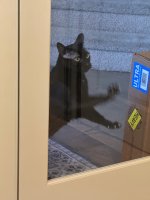
We got back the results of the test on 06/04/2026, and his glucose was 469, and the vet let us know that he had diabetes. This news was devastating to me at first. Loki is my best friend and we spend a ton of time together, he sleeps on my chest, he sits on my lap during the evenings. He's the sweetest cat I've ever known. I included a couple of photos to show his character (scratching at my office glass for breakfast, hanging out with his cat and dog brothers, and sleeping in his "sack" bed).
I want to say thanks to everyone here for making all the awesome educational content. I was able to learn all about the different kinds of insulins, proper dosing, how to use syringes, home glucose testing, all sorts of important stuff. It also helped me feel so much better about his diagnosis and possible outcomes of managing it correctly.
One of the key things I learned was how important the nutrition was, both for stable blood glucose levels and for possible remission. We knew, from previous cats, how prone male cats are to UTIs, and that wet food helps tremendously with that, so we had been feeding both cats a split diet of Tiki Cat After Dark wet food (very low carb) and a 35% carb dry food.
I determined that changing his diet to pure wet food was the right move. We also determined that there was no real reason not to transition both cats over, since it's objectively better for them.
I was concerned to start the insulin at the same time as doing a diet change, because if he barfed or was lethargic or didn't eat, I didn't want to confuse the two, as a beginner, so I decided to do that first before doing anything else. Over the course of a week, we changed both cats to pure Fancy Feast Classic Pate. we tried a couple different options but they absolutely love that one and gobble it down, which made the switch super easy!
Once he was switched over, we had a follow-up visit with the vet, to go over proper dosing procedures (with saline solution) as well as how to lance and draw blood to do an at-home glucose test, as well as to get another test done to determine his current glucose level so we could set his dose.
Surprisingly, his glucose at the vet was down a bunch! He tested at 285 on an AlphaTrak3.
We decided (along with the vet) to start him on 1u of insulin (Lantus, because it seems easier to manage and higher rate of remission, and is also cheaper) instead of the 2u that the vet originally had planned when his number came back at 469 originally. Loki is a big cat (vet estimates his ideal weight at 13-14 pounds), so he's actually not needing to gain any more weight, but I felt a lot better starting with a low dose in case we did something wrong or he ended up in hypo.
Since 06/11 I have been giving him 1u twice a day. It has been a bit of effort to get him used to the regular testing, but we have come up with a routine that works well! I wanted to go at least a week before doing a curve because I know he gets finicky with new experiences, but now that he knows he gets Churu if he's chill, he has learned to sit mostly still.
I'm wrapping up a curve today, but it is pretty clear that his numbers are sitting around the 250 range.
Based on the SLGS method, since we've been at it for 10 days, the insulin should have had time to build up in his system, and so I think we can safely raise his dose for a week or two to see how he does.
Here's my one question - based on SLGS, regardless of the number, I should raise him by 0.5. Our vet is out of town and the other vet that talked to us said we should consider raising his dose, but they suggested a 2u dose (our vet would be fine with us doing whatever we feel is best, this other vet is just trying to assist in her absence). They don't have access to the spreadsheet and their assistant told them his numbers were 300+ consistently, which isn't really true, I would say they're settling into a 265 average the past few days. I haven't reached out to clarify yet, I wanted to ask here first. So the question is - should we go ahead and keep with SLGS and raise him to 1.5u twice daily for the next week? or should we jump up to 2u since he's a big cat and his numbers are still fairly high?
My thinking is - the longer term goal is to get him to be around the ideal blood glucose, BUT the hypo risk is a massive downside. I think it's better for him to have higher numbers for a week than it is for us to risk overdosing him, and doubling his dose might be too big of a swing, especially since Lantus takes a while to build up in his system. So I am leaning towards 1.5u twice daily and checking in with our vet when she is back from vacation and monitoring him for another week.
My goal is to get him used to the curves so that I can test him as often as I'd like, and within the next month or so, switch him to Tight Regulation. since he's on exclusively low-carb wet food, and my wife and I both work from home, it's not too much of a burden. We want his remission odds and his safety to be as high as possible. I'm afraid if we jump up in the dose too fast on SLGS it might take longer in the end to figure out the general range that works for him and so we can start him on TR.
Thanks in advance for any advice you can give, and thank you even more so for being such a kind and caring and welcoming community! Reading through the site and everyone's posts in the forums helped me through a really dark time, and it turns out that it's not that hard, and Kitty is a champ! He yowls a bit when I do the blood draw and he shies from the needles, but he tolerates it, and we're finding methods to make it easier on him over time. I have confidence now that I can get it under control, and I'm so glad I read up on all of this so I didn't start him on the pill and miss the opportunity to possibly get him into remission and back to better health (the remission rates of the pill seem far lower, and it seems much more dangerous for the cat as well!)
My name is Luke, and my cat's name is Loki. He's about 9 years old, and he's been a generally healthy and very active cat his whole life (we got him when he was under a year old, he was a stray).
About a month and a half ago, I noticed that he had gotten quite thin. I originally thought it was because we had switched from his favorite food to a digestive support food (for his cat brother Caterpie, not because Loki needed it for any reason). I started feeding him the food he liked more, and he put some weight back on. Everything seemed fine, but he used to be quite a big cat (15-16 lbs) and he was hovering around 14.5 lbs.
Unfortunately we've been in search of a new vet, because our previous vet has raised prices and not provided very good care. We took Loki to a new vet, but we really didn't like them. They gave him a clean bill of health barring a blood / thyroid test. That vet wanted $500 for blood tests on top of the vet visit cost, which we researched and determined was way above market, so we went to another vet that we had previously taken Caterpie to and had a good experience with.
This new vet gave him an overview and examined him much more carefully, and recommended a full blood panel in addition to a thyroid test, and the total cost of the new pet exam + the blood panel (including thyroid) + a urinalysis was under $400. she also spent much more time with us and is one of the owners of the practice. Needless to say, we are sticking with this vet, she is much better.
We got back the results of the test on 06/04/2026, and his glucose was 469, and the vet let us know that he had diabetes. This news was devastating to me at first. Loki is my best friend and we spend a ton of time together, he sleeps on my chest, he sits on my lap during the evenings. He's the sweetest cat I've ever known. I included a couple of photos to show his character (scratching at my office glass for breakfast, hanging out with his cat and dog brothers, and sleeping in his "sack" bed).
I want to say thanks to everyone here for making all the awesome educational content. I was able to learn all about the different kinds of insulins, proper dosing, how to use syringes, home glucose testing, all sorts of important stuff. It also helped me feel so much better about his diagnosis and possible outcomes of managing it correctly.
One of the key things I learned was how important the nutrition was, both for stable blood glucose levels and for possible remission. We knew, from previous cats, how prone male cats are to UTIs, and that wet food helps tremendously with that, so we had been feeding both cats a split diet of Tiki Cat After Dark wet food (very low carb) and a 35% carb dry food.
I determined that changing his diet to pure wet food was the right move. We also determined that there was no real reason not to transition both cats over, since it's objectively better for them.
I was concerned to start the insulin at the same time as doing a diet change, because if he barfed or was lethargic or didn't eat, I didn't want to confuse the two, as a beginner, so I decided to do that first before doing anything else. Over the course of a week, we changed both cats to pure Fancy Feast Classic Pate. we tried a couple different options but they absolutely love that one and gobble it down, which made the switch super easy!
Once he was switched over, we had a follow-up visit with the vet, to go over proper dosing procedures (with saline solution) as well as how to lance and draw blood to do an at-home glucose test, as well as to get another test done to determine his current glucose level so we could set his dose.
Surprisingly, his glucose at the vet was down a bunch! He tested at 285 on an AlphaTrak3.
We decided (along with the vet) to start him on 1u of insulin (Lantus, because it seems easier to manage and higher rate of remission, and is also cheaper) instead of the 2u that the vet originally had planned when his number came back at 469 originally. Loki is a big cat (vet estimates his ideal weight at 13-14 pounds), so he's actually not needing to gain any more weight, but I felt a lot better starting with a low dose in case we did something wrong or he ended up in hypo.
Since 06/11 I have been giving him 1u twice a day. It has been a bit of effort to get him used to the regular testing, but we have come up with a routine that works well! I wanted to go at least a week before doing a curve because I know he gets finicky with new experiences, but now that he knows he gets Churu if he's chill, he has learned to sit mostly still.
I'm wrapping up a curve today, but it is pretty clear that his numbers are sitting around the 250 range.
Based on the SLGS method, since we've been at it for 10 days, the insulin should have had time to build up in his system, and so I think we can safely raise his dose for a week or two to see how he does.
Here's my one question - based on SLGS, regardless of the number, I should raise him by 0.5. Our vet is out of town and the other vet that talked to us said we should consider raising his dose, but they suggested a 2u dose (our vet would be fine with us doing whatever we feel is best, this other vet is just trying to assist in her absence). They don't have access to the spreadsheet and their assistant told them his numbers were 300+ consistently, which isn't really true, I would say they're settling into a 265 average the past few days. I haven't reached out to clarify yet, I wanted to ask here first. So the question is - should we go ahead and keep with SLGS and raise him to 1.5u twice daily for the next week? or should we jump up to 2u since he's a big cat and his numbers are still fairly high?
My thinking is - the longer term goal is to get him to be around the ideal blood glucose, BUT the hypo risk is a massive downside. I think it's better for him to have higher numbers for a week than it is for us to risk overdosing him, and doubling his dose might be too big of a swing, especially since Lantus takes a while to build up in his system. So I am leaning towards 1.5u twice daily and checking in with our vet when she is back from vacation and monitoring him for another week.
My goal is to get him used to the curves so that I can test him as often as I'd like, and within the next month or so, switch him to Tight Regulation. since he's on exclusively low-carb wet food, and my wife and I both work from home, it's not too much of a burden. We want his remission odds and his safety to be as high as possible. I'm afraid if we jump up in the dose too fast on SLGS it might take longer in the end to figure out the general range that works for him and so we can start him on TR.
Thanks in advance for any advice you can give, and thank you even more so for being such a kind and caring and welcoming community! Reading through the site and everyone's posts in the forums helped me through a really dark time, and it turns out that it's not that hard, and Kitty is a champ! He yowls a bit when I do the blood draw and he shies from the needles, but he tolerates it, and we're finding methods to make it easier on him over time. I have confidence now that I can get it under control, and I'm so glad I read up on all of this so I didn't start him on the pill and miss the opportunity to possibly get him into remission and back to better health (the remission rates of the pill seem far lower, and it seems much more dangerous for the cat as well!)