Hi there,
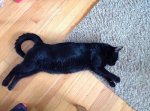
Pita looks how my Saoirse looked when she was first diagnosed. Saoirse also the same physical symptoms as you describe. If you see her photo next to this post I think you'll agree she looks much better now.

Cats may look very poorly prior to treatment but the rate of recovery as soon as they start insulin treatment can be amazing. From the start of treatment, they usually make rapid progress. You should see reductions in hunger, drinking and peeing within days of starting insulin and there can be a marked reduction in lethargy after a week or so. Weight loss should halt pretty much immediately, and Pita should start regaining muscle mass again. Coat condition starts to improve after that (although some cats shed mightily with the start of new fur growth!).
There is no denying that there is something of a learning curve at first when treating diabetes and you may experience a few hiccups when first starting to test - but we can help and support you through all that. The good news is that you can quickly get into a routine that works for you and Pita in terms of giving injections, and shortly after you start home testing it gets easier and easier to get a blood sample since the testing itself triggers generation of new capillaries at the test sites. With an established routine, simple tracking of blood glucose (BG) levels (we can help you with that), a safe dose, you can achieve good regulation for your cat with, on average, 3 or 4 tests a day. Once you get into the routine, testing and giving insulin take only minutes to do. Most people here use human glucometers and a cat-specific reference range to monitor BG levels. It is safe, effective, and the test strips are much, much more economical than the strips needed for pet glucometers. The Relion Confirm and Micro glucometers available from Walmart are popular with a lot of US members. When you are home testing you will be able to run periodic glucose curves at home. This will give a picture of Pita's levels without the risk of them being temporarily elevated by vet visit stress. In addition to providing more reliable information upon which to make dosing adjustments, it also saves on vet fees.
Urine test strips for detecting ketones (e.g. Keto-diastix) are another staple: just dip them in some of Pita's urine to make sure she is ketone-free. (Ketones can lead to diabetic ketoacidosis, a potentially fatal complication of diabetes.) Indeed, if Pita is not yet on insulin I recommend you start testing for ketones immediately. You can get the strips at pharmacies or anywhere else that does diabetic test supplies. (Note: if you get a positive result - even a trace - you need to let the vet know as a matter of urgency; they need to be treated very promptly.)
If you can make sure her diet is restricted to low carb, wet food then that will help a great deal with reducing her blood glucose levels. There is no need for expensive prescription diets. Larry has given you a link to our food list. A lot of people here feed the Fancy Feast classic patés with great success. (NB - Fancy Feast gravy lovers are higher in carbs but it is a good idea to get a few tins to keep in your store cupboard: in case Pita ever went a bit low on her insulin the gravy varieties are very good for raising blood glucose up to a better range.) If Pita is already receiving insulin, you should wait until you are home testing to make a diet change as the drop in carbohydrate content frequently results in a quick and significant reduction in blood glucose levels and the insulin dose would most likely need to be reduced. Diet changes should be done slowly and gradually over several days to avoid digestive upsets.
I am assuming that Pita is only recently diagnosed. If that is the case and you make the diet change, get her onto one of the longer-acting insulins such as Lantus, Levemir or Prozinc and home test her BG levels it will give her a very, very good chance of achieving diabetic remission. With prompt treatment a cat's pancreas can rest and may recover its ability to produce enough insulin not to need daily insulin injections, just a low carb diet.
For information, Lantus is very expensive in the US but if you choose to use it we can help you find it
much cheaper from Canadian pharmacies. We can also help you find other diabetic supplies like syringes at good prices.
If Pita is already on insulin and her symptoms still aren't improving then there is a strong possibility that she's just on the wrong dose of insulin (or her current insulin isn't working well for her). We can help you with that. Could you let us know if she is on insulin. If yes, it would be helpful to hear which insulin she is being treated with, the approximate date she started treatment, and her current dose. If it is the case that Pita is receiving insulin, then if you start home testing and keeping a log of her blood glucose in one of our shareable spreadsheets there are some very experienced members here who will be able to help you towards getting Pita's insulin sorted out. Again, we can help you to set up a spreadsheet: it might look a bit 'high-tech' but it's really easy to use when you get going!
There is hope. Just let us know what we can do to help you help Pita.
Mogs
.

 This is Pita. She has a bloated tummy and her hind quarters are shrunken.
