7/22 Jack: 70@AMPS, 94@+3hrs, 123@+5hrs- new kibble mix

Jack & Mopem'sMom

Member Since 2020
Jack is doing well, he held onto the 100s yesterday (juuusst barely by PMPS but we made it an all blue day so I'll take it) No surprises while I got stuck out longer than anticipated, so also happy about that. We have some nice green going on this morning, so hoping we see more of that color today.

The only thing that's different is the kibble mix: we finished the Elsey's and Ziwi chicken 50/50 mixture, and since the Elsey's salmon is the same carbs as the chicken, and the Ziwi mackerel is actually less carbs, I decided to order the salmon and the mackerel instead of the chicken. Also, the last time the Elsey's chicken came, it seemed drier than usual and more crumbly- there were crushed pieces in the bag which makes it very hard to just dole out a few pieces at a time. I'm pleased with the new bag of salmon, seems like the pieces are all intact, so easier to be stingy with them when he is being beastly, AND it's a different flavor, so Jack wins the variety war as well. He wasn't really liking the Ziwi chicken, and had resorted to picking out the Elsey's pieces from the mixture and leaving the Ziwi, so it was just going to be a wast of $$ if I didn't change it anyway.

Hope everyone has a good weekend....lovely weather here in the mountains. Paws crossed Jack cooperates and I can get to visit my sister and her crew of critters for a little bit tomorrow.

Yesterday's thread: https://www.felinediabetes.com/FDMB/threads/7-21-jack-138-amps.279755/
 
H Christine, a good report on Jack, got some nice green and blues going on, stay dark green Jack. I hope you can visit with your sister tomorrow, so tell Jack I said he better behave .
Have a nice day :bighug::bighug::bighug::cat:
Edit The salmon is a little higher carbs then the chicken but not bad
Found this answered on the Chewy site
What is the carbohydrate content?
Answer by • Apr 02, 2022
This recipe contains approximately 7.36% carbohydrates on an as-fed basis (approximately 8.56% carbohydrates on a dry matter basis).
 
Last edited:
H Christine, a good report on Jack, got some nice green and blues going on, stay dark green Jack. I hope you can visit with your sister tomorrow, so tell Jack I said he better behave .
Have a nice day :bighug::bighug::bighug::cat:
Edit The salmon is a little higher carbs then the chicken but not bad
Found this answered on the Chewy site
What is the carbohydrate content?
Answer by • Apr 02, 2022
This recipe contains approximately 7.36% carbohydrates on an as-fed basis (approximately 8.56% carbohydrates on a dry matter basis).
So I never looked at the questions section, I was looking at the kcal counts. This doesn't make sense to me? How can the kcals be the same but the carb counts different? Have I been looking at the wrong thing the past year?? (SMH...probably)
salmon= 4030 kcal/kg 544kcal/cup This recipe contains approximately 7.36% carbohydrates on an as-fed basis (approximately 8.56% carbohydrates on a dry matter basis).
chicken = 4030 kcal/kg 544kcal/cup This formula has a carbohydrate content of 4.12% on an as fed basis (4.69% on a dry matter basis).
 
How can the kcals be the same but the carb counts different?

Hi Christine! The whole carbs vs calories thing is very confusing indeed :D

The answer to your question lies in the composition of the food and the sources of calories it contains.

Kcal, or calories, in cat food primarily come from three main macronutrients: carbohydrates, proteins, and fats. The caloric content of a food is determined by the amount of energy these nutrients provide when metabolized by the cat's body.
For our FD cats, we mainly look at the calories (amount of energy) from carbs (nutrients) when selecting the cat food. If there are other specific needs / complications, then we look at the amount of other ingredients too.

Cat foods are formulated to meet specific nutritional profiles and may vary in the proportion of carbs, proteins, and fats they contain. If one product has higher carbs, it might compensate by having lower fat or protein content or vice versa to maintain the same kcal. Basically the addition of calories from carbs, proteins and fats has to add up to the total kcal/kg for that product.

Another reason is the difference in the energy density of macronutrients. Fat provides the most calories per gram (8.5 kcal/g), followed by carbohydrates and proteins (both providing 3.5 kcal/g). To achieve the same kcal in a product, the quantity of each macronutrient will be adjusted accordingly.

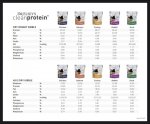
This link to Dr. Elsey’s different kibble flavours shows the carbs as per dry matter basis and as fed basis. It is slightly dated though (Mar 2022).
https://www.drelseys.com/wp-content/uploads/2022/03/drelseyskibblechart32322.pdf

upload_2023-7-23_2-57-22.jpeg
 

Attachments

  • upload_2023-7-23_2-57-22.jpeg
    upload_2023-7-23_2-57-22.jpeg
    61.9 KB · Views: 211
Hi Christine! The whole carbs vs calories thing is very confusing indeed :D

The answer to your question lies in the composition of the food and the sources of calories it contains.

Kcal, or calories, in cat food primarily come from three main macronutrients: carbohydrates, proteins, and fats. The caloric content of a food is determined by the amount of energy these nutrients provide when metabolized by the cat's body.
For our FD cats, we mainly look at the calories (amount of energy) from carbs (nutrients) when selecting the cat food. If there are other specific needs / complications, then we look at the amount of other ingredients too.

Cat foods are formulated to meet specific nutritional profiles and may vary in the proportion of carbs, proteins, and fats they contain. If one product has higher carbs, it might compensate by having lower fat or protein content or vice versa to maintain the same kcal. Basically the addition of calories from carbs, proteins and fats has to add up to the total kcal/kg for that product.

Another reason is the difference in the energy density of macronutrients. Fat provides the most calories per gram (8.5 kcal/g), followed by carbohydrates and proteins (both providing 3.5 kcal/g). To achieve the same kcal in a product, the quantity of each macronutrient will be adjusted accordingly.

This link to Dr. Elsey’s different kibble flavours shows the carbs as per dry matter basis and as fed basis. It is slightly dated though (Mar 2022).
https://www.drelseys.com/wp-content/uploads/2022/03/drelseyskibblechart32322.pdf

View attachment 67318
Oh My Word! This is making my head hurt. Thank you so much for this explanation; I've read it through a few times, and maybe I'm just thick in the head, or maybe it's the lingering pain from my dental work, but basically I should look at the carbs not calories? And what is per dry matter vs. as fed? I guess I look at 'as fed?' And thank you soooo much for the Elsey's chart! :bighug::bighug:I guess we are going back to chicken when I order next. :banghead:
 
I'll never understand this lol.
@Jack & Mopem'sMom
I found this thread Christine where members discussed this and I still don't get it
Things like these are very confusing to me too, unless I get some visual representation of what is actually going on :D

@Nimi S
Hi Nimi so when we want to know how many carbs do we go by as feed or dry matter, I have asked this question before and some say go by dry matter and some say go by as fed

You’re right. You can use either dry matter or as fed values. BUT you have to input those values in another calculation to find out what is the % of calories you get from those values.
The % of calories are what we use to determine if a food is LC/MC/HC.

so you can’t simply use the dry matter or as fed values to say if a food is LC/HC/MC.

I replied to Christine’s new condo but I hope I haven’t confused her even more :nailbiting:
 
Things like these are very confusing to me too, unless I get some visual representation of what is actually going on :D


You’re right. You can use either dry matter or as fed values. BUT you have to input those values in another calculation to find out what is the % of calories you get from those values.
The % of calories are what we use to determine if a food is LC/MC/HC.

so you can’t simply use the dry matter or as fed values to say if a food is LC/HC/MC.

I replied to Christine’s new condo but I hope I haven’t confused her even more :nailbiting:
Thank you Nimi :bighug::cat:
 
Back
Top