6/4/20 New member: Slightly urgent, what to do with my cat??

Status
Not open for further replies.

PH&MonkeyPenPenFaFaTiger

Member Since 2020
Dear all,

Since yesterday, I have been studying things about feline diabetes. Pardon me if I ask something obvious or things I should be able to learn myself, because this is related to safety of my cat and it is slightly urgent. (I hope it is not too late).

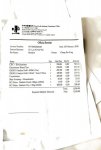
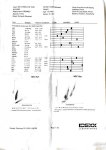
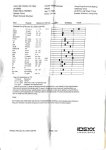
My family member took my cat, Monkey, to the yet on 17/3/2020 (about 3 weeks ago). Monkey was diagnosed to have diabetes (I am not sure type 1 or 2). The previous blood test one month ago indicate that most of his organs should be fine, attached is the blood report. (I was not in the clinic so I can only rely on my family member's memory.)

His health is deteriorating quickly. He is losing weight, losing a lot of fur, have rough skin, his back leg is walking sloppily (I read from this website it is a common neuropathic disease for diabetic cat?), less active than usual, and meows loudly seemingly for food and water.

He is about 13 years old. Eat dry cat food for all his life, except occasionally we give him some chicken meat and seafood.

We gave him insulin (Caninsulin) for 3 weeks already, one 0.3mL injection per 12 hours.I start this thread today is that I trusted the discretion of the vet and my family member, but now I have serious doubt so I come to this wonderful website to learn more. As mentioned above, I started studying here from yesterday.

My questions:

1. I started to monitor his BG today. The first time is today, after Monkey ate around 7-10 am injecting insulin at 1pm (That's a mistake? I read I should inject insulin 20 mins after diabetic eat), my family member blood check him at 3:40 pm, the result is 475 mmol/L. I blood check him at 5:34 pm, the result is 196 mmol/L. At night Monkey ate at 9 pm and inject insulin in 9:20 pm, the BG at 11:00 pm is on average for four attempts (346+441+345+391)/4 = 380 mmol/L. May I ask is this an acceptable error for the BG testing device? Also, is these level appropriate given that I have injected insulin hours ago? How do I know I need to increase or decrease the volume of insulin injection?

2. How often should I monitor the BG? I am at home most of the time. I read I should get a BG curve to know the insulin onset, peak/nadir, duration. And "As a minimum, for your cat’s safety, always testing the BG before you give an insulin shot" What I think is that I should get at least 2 BG to 5 BG blood per day, in order to understand the effect of insulin, prevent hypoglycemia, know when to increase or decrease the insulin injection, monitor BG if I want to change his food to wet food.

But my parents object my idea because they thing one BG check per 2 week is enough. And blood checking is too painful for the cat, (What I observe is the cat calm most of the time). and said I am insane to have the idea of so many blood checks per day. May I ask, does my ideas make sense or not? For the health of Monkey.

3. Is changing to dry food to wet can good a important and urgent step to heal Monkey? I read that it can be dangerous according to Dr. Pierson since wet can food cause less increase in BG, and insulin can get the BG too low thus hypoglycemia. Please tell me how can I do the transition as safe as possible? How urgent is the transition? Do I need to change the food immediately or within weeks?

4. Most of the food in Dr.Lisa food chart is not available in Hong Kong. I bought a can today, the brand is Thrive Complete it emphasize no grain, gluten or meat derivative. and it writes" Chicken breast 70%, chicken stock, chicken Liver, 5%, sunflower oil, vitamin and minerals. Analytical Constituents: Crude protein 16%, Crude Oil and Fats 2%, Crude ash 1.5%, Crude Fibre 0.1%. Moisture 80%. Nutritional Additive per 100g. Vitamin A 2800 IU, Vitamin D3 29 IU. Trace element Zinc 12mg, iron 6mg, Maganese 1.4 mg, Copper 0.6mg, iodine 0.2mg, tarine guide 0.5g

I may want to try this can, because it seems that there is high chicken protein and not much carbs and plants product in this can. Does my idea make sense? Can it's claims be trusted?

I wholeheartedly appreciate any help, sorry if I write too long and ask stupid questions. I really want to make sure every tiny bit of my idea make sense for the health of Monkey.
 

Attachments

  • monkey 1.jpg
    monkey 1.jpg
    48.5 KB · Views: 139
  • monkey 2.jpg
    monkey 2.jpg
    43.4 KB · Views: 144
  • Monkey report p1.jpg
    Monkey report p1.jpg
    32.3 KB · Views: 128
  • monkey report p2.jpg
    monkey report p2.jpg
    35.6 KB · Views: 127
  • monkey report p3.jpg
    monkey report p3.jpg
    38.9 KB · Views: 134
Last edited:
First off your parents are wrong taking BG test is the ONLY way to regulate.

Changing to wet food is important because dry is PACKED with carbs the very thing you need to avoid. BUT BUT BUT you must do this slowly and ONLY if home testing the removal of dry food could drop his number significantly! You must test test teat when removing dry food.

The ONLY stupid question is the one NOT asked thats what we are here for.

Now to be honest I havent had a diabetic kitty in many years but there are PLENTY her who WILL guide you
The BEST hting you have done is found us. Hang in there more people will come to the rescue! They will be able to address the rest of your concerns.

WELCOME TO FDMB THE BEST PLACE TO HELP YOU HELP YOUR CAT!
 
Hi Peter and Monkey.

Glad you found us so early.


What insulin are you using, and how many units of insulin in the morning and evening are you giving?

Thanks for your great help

We gave him insulin (Caninsulin) for 3 weeks already, one 0.3mL injection per 12 hours. However, my family members are not very precise in the timing of injection. So now i have to enforce for more precise injection
 
But my parents object my idea because they thing one BG check per 2 week is enough. And blood checking is too painful for the cat, (What I observe is the cat calm most of the time). and said I am insane to have the idea of so many blood checks per day. May I ask, does my ideas make sense or not? For the health of Monkey.
I can tell you this as far as testing...testing on the ear is the best place. There are fewer nerves there and it is NOT painful. I am part of a TNR group (Trap, Neuter, Release) where we trap feral (wild) cats and have them 'fixed' and the vet will either notch or tip the cats ear. A couple of times my vet has forgotten to notch the ear while the cat was still under anesthesia and I had to take them back, fully coherent. The vet tech took the kitties back, noted the ear, and brought back to me. No crying, no scratching, nothing. A little bit of blood. Honestly, I don't think they ever knew. All that to say, don't worry about hurting your kitty by testing his ear. They hardly know. :)
 
I can tell you this as far as testing...testing on the ear is the best place. There are fewer nerves there and it is NOT painful. I am part of a TNR group (Trap, Neuter, Release) where we trap feral (wild) cats and have them 'fixed' and the vet will either notch or tip the cats ear. A couple of times my vet has forgotten to notch the ear while the cat was still under anesthesia and I had to take them back, fully coherent. The vet tech took the kitties back, noted the ear, and brought back to me. No crying, no scratching, nothing. A little bit of blood. Honestly, I don't think they ever knew. All that to say, don't worry about hurting your kitty by testing his ear. They hardly know. :)
They may object but thats why God invented TREATS!
 
Hi Peter, Welcome. I'm going to start right in, asking you some questions and trying to answer some of your questions. Please, give me some time.

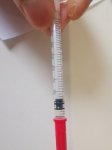
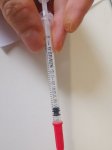
You said that Monkey gets 0.3mL which is 30 Units. Do you mean 3 units? Is that with a U40 syringe? Or are you using U100 syringes that are a 0.3mL volume?

Would you please take a picture of the syringe you are using, with the plunger positioned at the dose you give your cat.

Has the dose been increased, decreased, or stayed the same since you started the Caninsulin 3 weeks ago? Would you please tell us the insulin dosing history?

The insulin doses should be 12 hours apart. It looks like you gave insulin at 1 PM and then at 9:20 PM. That is only about 8.5 hours hour apart. Please do not give your cat insulin more frequently than every 12 hours.

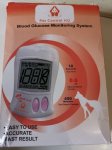
Which meter are you using for testing your cat Monkey? I'm looking for the specific name of the glucometer.

May I ask is this an acceptable error for the BG testing device? Also, is these level appropriate given that I have injected insulin hours ago? How do I know I need to increase or decrease the volume of insulin injection?
That is 3 questions in 1, so I will give you three answers.
- Yes, those blood glucose tests you got are within what is known as "meter variance" which can be 15%.
- Those blood glucose numbers are reasonable. But that could partially be because you gave the insulin doses very close together. Or the insulin dose wore off. Or it's too early in the cycle for the insulin to have it's onset.
- dose changes are based on insulin dosing protocols.
 
Last edited:
2. How often should I monitor the BG? I am at home most of the time. I read I should get a BG curve to know the insulin onset, peak/nadir, duration. And "As a minimum, for your cat’s safety, always testing the BG before you give an insulin shot" What I think is that I should get at least 2 BG to 5 BG blood per day, in order to understand the effect of insulin, prevent hypoglycemia, know when to increase or decrease the insulin injection, monitor BG if I want to change his food to wet food.
First, please test the BG (blood glucose) before every dose of insulin given. That is to make sure the BG (blood glucose) level is high enough to give your cat insulin for that 12 hour cycle.

The number of BG tests is per insulin dosing cycle, not per day. Each insulin dosing cycle is 12 hours, so at least 2 tests per cycle would be good. More tests will be needed, when you do not know the onset, peak/nadir and duration are needed at the beginning. So maybe 5 BG tests per 12 hour cycle might be needed. Not always, not every day, but sometimes you will need to test more.

We have a spreadsheet template that you can copy and use. Directions are linked below, and what is means is the next link. Instructions include screen shots, and have directions for setting up the spreadsheet (SS) and linking it to your User ID "Signature". Directions include setup on a pc, tablet or smartphone.
If you would please set that up, I'll work on getting more of your questions answered.

Yes, you want to be testing his BG's before you change the food from dry to wet.
Yes, you want to be testing Monkey's BG's to prevent hypoglycemia.
Yes, you want to be testing more than every 2 weeks.
We are big proponents of home testing, which you started to do this morning.
 
3. Is changing to dry food to wet can good a important and urgent step to heal Monkey? I read that it can be dangerous according to Dr. Pierson since wet can food cause less increase in BG, and insulin can get the BG too low thus hypoglycemia. Please tell me how can I do the transition as safe as possible? How urgent is the transition? Do I need to change the food immediately or within weeks?
Get good with testing the blood glucose levels at home first. Then monitor the blood glucose levels more closely as you do the food change.

The transition to wet food depends on how much your cat likes the wet food. Some cats like wet food and are easy to transition. Other cats are more stubborn and it can take time to get them to eat wet/pouched/ canned food.

The transition to wet food depends on getting good at home testing first.
The transition to wet food needs to be done slowly, over a week's time, to minimize digestive upset for your cat.
Change a little bit each day, giving some dry food each meal, and some wet food each meal. Gradually decrease the dry food and increase the wet food during that week, until your cat is eating all wet food.

How much dry food does your cat Monkey eat now?
 
Hello and welcome!!!

Deb has given you a lot of fantastic information and asked a bunch of important questions, so I won't add to that, just wanted to say hi and to reassure you that you are doing the right things for Monkey. It is so hard to see them when they are in poor condition from diabetes, but you are in absolutely the right place to get him back to good health :).
 
Hello Peter! First, I want to say that you are wonderful to want to take such good care of Monkey. Monkey is lucky to have you. You can absolutely help Monkey feel better by studying on this site and making some changes to his care. I'll do my best to answer some of your questions, and I'm sure other members of the site will be in to answer anything I cannot. I admit, I don't know much about the insulin you are using. It is a fairly harsh insulin, and often prescribed by vets, though it isn't the best insulin for cats. To get more information specifically on Cannisulin, make sure you read The Beginner's Guide to Cannisulin.
Now, let's look at the questions you have.

1- Yes, that's acceptable variation for the testing device. If you test several times in a row, you will get a little variation. Yes, Cannisulin is a fast acting, strong insulin, and you should always feed 20 minutes before injection. This helps keep Monkey safe from the insulin dropping his blood sugar too low, which can be dangerous. The best way to know if it's time to increase or decrease a dose amount is to make a chart of your BGL test results. Look at my signature and click on "Billy's Spreadsheet." You can see how often I tested once I knew I needed to test more often. You can see how once Billy dropped into green numbers, we knew we had to lower his dose. This site has a template for that chart, and it's easy to make one for Monkey. Then members here can help advise about dose. Go to New? How you can help us help you! to read how to set up a spreadsheet and signature.

2- Testing before every shot is needed. In addition to that, getting at least a couple mid-cycle tests in helps paint a picture of how Monkey is responding to the insulin. It doesn't always have to be at the same time every day. One day you might get a test at +3 and +5 (3 hours after injection and five hours after.) and the next day you might get +5 and +7. In the evening, you might get one in right before bed, or set an alarm some nights so you can catch a +6. Once a week, you should get a "curve." That's a test every 2 hours for a 12-hour cycle, so six tests that day.

3- Yes. Changing to only wet food can have a big positive effect on Monkey's BGL. It is important to be testing his BGL when you do it, as the change to low carb wet can drop a cat's BGL over 100 points, and sometimes the dose ends up needing to be reduced. Make the change slowly, take a few days to slowly cut out the dry food, as this will be easier on his system. Sooner the better, but make the change slowly.

4- That food looks really good for Monkey. Honestly, you are just looking for food that has zero to very little plant sources. (grains, beans, peas, tapioca, corn starch, vegetables.) The food you are looking at seems to be mostly made of meat, which is great for Monkey.

You are awesome for doing your own research and helping Monkey!
 
4. Most of the food in Dr.Lisa food chart is not available in Hong Kong. I bought a can today, the brand is Thrive Complete it emphasize no grain, gluten or meat derivative. and it writes" Chicken breast 70%, chicken stock, chicken Liver, 5%, sunflower oil, vitamin and minerals. Analytical Constituents: Crude protein 16%, Crude Oil and Fats 2%, Crude ash 1.5%, Crude Fibre 0.1%. Moisture 80%. Nutritional Additive per 100g. Vitamin A 2800 IU, Vitamin D3 29 IU. Trace element Zinc 12mg, iron 6mg, Maganese 1.4 mg, Copper 0.6mg, iodine 0.2mg, tarine guide 0.5g

I may want to try this can, because it seems that there is high chicken protein and not much carbs and plants product in this can. Does my idea make sense? Can it's claims be trusted?
Yes, the Thrive Complete canned food looks like a reasonable choice of food for a diabetic cat. No way to tell what the exact carbohydrate content percentage is, but the ingredients look reasonable.
Using the Analytical Constituents in a basic cat food carb calculator gives 1-2% carbs, which would be expected from the ingredients.

Are any of these foods in the following lists available in Hong Kong? The first 2 lists were created by one of our members in Australia.
The second link is a list from one of our members in the United Kingdom. >>>>>> UK Cat Food List
 
Hi Peter and Monkey and welcome to the forum. I’m so glad you found us.
Do you think you could get a clearer picture of the pathology results for us to see please..?
That are blurry when enlarged. Thanks
 
Hi Peter and Monkey and welcome to the forum. I’m so glad you found us.
Do you think you could get a clearer picture of the pathology results for us to see please..?
That are blurry when enlarged. Thanks
Hi Peter and Monkey and welcome to the forum. I’m so glad you found us.
Do you think you could get a clearer picture of the pathology results for us to see please..?
That are blurry when enlarged. Thanks

Hi Bron and Sheba,

My apology, I have upload a clearer picture. Many thanks.
 
Hi Peter, Welcome. I'm going to start right in, asking you some questions and trying to answer some of your questions. Please, give me some time.

You said that Monkey gets 0.3mL which is 30 Units. Do you mean 3 units? Is that with a U40 syringe? Or are you using U100 syringes that are a 0.3mL volume?

Would you please take a picture of the syringe you are using, with the plunger positioned at the dose you give your cat.

Has the dose been increased, decreased, or stayed the same since you started the Caninsulin 3 weeks ago? Would you please tell us the insulin dosing history?

The insulin doses should be 12 hours apart. It looks like you gave insulin at 1 PM and then at 9:20 PM. That is only about 8.5 hours hour apart. Please do not give your cat insulin more frequently than every 12 hours.

Which meter are you using for testing your cat Monkey? I'm looking for the specific name of the glucometer.


That is 3 questions in 1, so I will give you three answers.
- Yes, those blood glucose tests you got are within what is known as "meter variance" which can be 15%.
- Those blood glucose numbers are reasonable. But that could partially be because you gave the insulin doses very close together. Or the insulin dose wore off. Or it's too early in the cycle for the insulin to have it's onset.
- dose changes are based on insulin dosing protocols.

Hi Deb

My apology, I find out that it is my mistake. Please see the attachment, I think it is 3 unit of U40 syringe, see the image of plunger.

For insulin dosing history, I know it is the above volume, once at morning once at night. I find out my family members are being very inaccurate in the timing. As you have noticed, yesterday it was only 8.5 hours hour apart, that worried me a lot. Now I need to do it myself and be more accurate. I will post a spreadsheet later

The specific glucometer is Pet Control HQ Blood Glucose Monitoring System, please see the attachment.

I want to add that I will see a vet tmr, I am thinking how should I communicate with him. I heard that some vets are not well trained in treating diabetes cat, but at the same time very close minded. That's what I worry
 

Attachments

  • U40 1.jpg
    U40 1.jpg
    18.2 KB · Views: 138
  • u40 2.jpg
    u40 2.jpg
    21.3 KB · Views: 122
  • gluco.jpg
    gluco.jpg
    41.1 KB · Views: 138
  • gluco2.jpg
    gluco2.jpg
    35 KB · Views: 139
Last edited:
Hi Peter and Monkey and welcome to the forum. I’m so glad you found us.
Do you think you could get a clearer picture of the pathology results for us to see please..?
That are blurry when enlarged. Thanks
First, please test the BG (blood glucose) before every dose of insulin given. That is to make sure the BG (blood glucose) level is high enough to give your cat insulin for that 12 hour cycle.

The number of BG tests is per insulin dosing cycle, not per day. Each insulin dosing cycle is 12 hours, so at least 2 tests per cycle would be good. More tests will be needed, when you do not know the onset, peak/nadir and duration are needed at the beginning. So maybe 5 BG tests per 12 hour cycle might be needed. Not always, not every day, but sometimes you will need to test more.

We have a spreadsheet template that you can copy and use. Directions are linked below, and what is means is the next link. Instructions include screen shots, and have directions for setting up the spreadsheet (SS) and linking it to your User ID "Signature". Directions include setup on a pc, tablet or smartphone.
If you would please set that up, I'll work on getting more of your questions answered.

Yes, you want to be testing his BG's before you change the food from dry to wet.
Yes, you want to be testing Monkey's BG's to prevent hypoglycemia.
Yes, you want to be testing more than every 2 weeks.
We are big proponents of home testing, which you started to do this morning.

Can I say I should use US Spreadsheet Template for PET METERS CALIBRATED FOR FELINE BLOOD?

My glucometer is Pet Control HQ Blood Glucose Monitor System, it writes "Suitable for Dogs/Cats Testing Only", for details please refer to my previous post in this thread. I have an attachment.
 
Can I say I should use US Spreadsheet Template for PET METERS CALIBRATED FOR FELINE BLOOD?

My glucometer is Pet Control HQ Blood Glucose Monitor System, it writes "Suitable for Dogs/Cats Testing Only", for details please refer to my previous post in this thread. I have an attachment.
Hi Peter, I am going to tag @Marje and Gracie to look at your path results. She is excellent at interpreting them.
With your pet meter, does it read in mmol/ L or mg/dL? It will depend on that which SS you use.
 
What kind of threat is safe to Monkey? I worry about food can be dangerous to diabete cats.

Monkey likes shrimp, and dry food treat (that should be avoided, right?) Is shrimp safe for Monkey to eat? I read that sodium in seafood can cause problem to cats

Shrimp is Yummy! Just ask my Simba and Gustav and rescue babies Donna and Sessan.
And perfectly safe to give if not raw of course.
 
Well Peter what does Monkey like? It could be as simple as a small piece of cheese. Bonito flakes is a fave here...Small portions of shrimp like Ann suggested should be fine unless Monkey has kidney problems. I'm SURE others will add to this list.
You got this dude! Monkey is one lucky kitty to have you as his care giver!:bighug:
jeanne
 
What kind of threat is safe to Monkey? I worry about food can be dangerous to diabete cats.

Freeze-dried meats (chicken, etc.) are a good option. They get the dry crunchy texture they like, but it's just meat, so it doesn't have the carbohydrates of other dry treats. You can get some that are just a single ingredient, or else there are some that are more processed, but still just basically freeze-dried meat (a brand you can get here is called Orijen, but I don't know if that's available to you).
 
Freeze-dried meats (chicken, etc.) are a good option. They get the dry crunchy texture they like, but it's just meat, so it doesn't have the carbohydrates of other dry treats. You can get some that are just a single ingredient, or else there are some that are more processed, but still just basically freeze-dried meat (a brand you can get here is called Orijen, but I don't know if that's available to you).

Peter and Monkey lives in Hong Kong, Asia, were they don't have what's in U.S
, but it is definitely a Shrimp city. Also under coronavirus lockdown and right next to China.
 
Peter and Monkey lives in Hong Kong, Asia, were they don't have what's in U.S
, but it is definitely a Shrimp city. Also under coronavirus lockdown and right next to China.

That's true, I am not sure if Freeze-dried meats for human is available. I think I can find it in pet shop. My concern is, will there be too much bone mineral and unknown ingredients?

It seems that pet food industry involves in a lot of unethical practice. I will read the nutrition description carefully to minimize the risk...
 
Yes, since you are in Hong Kong, you use mmol/L. Same as China.
So when you set up the spreadsheet, choose the "World" template for pet meters.

If you are anywhere other than the US, please click on this link for the World Spreadsheet Template for PET METERS CALIBRATED FOR FELINE BLOOD (e.g. Alpha Trak):
World Spreadsheet Template for Pet Meters

Enter your data on the World version tab.
The spreadsheet will automatically populate the cells on the US tab that is in mg/dL. There is formatting behind the cells, that does this transfer of data automatically.

There is also a tab on the spreadsheet, where you can enter labwork results. First, you have to enter a column and add the reference ranges for the particular lab where the work was done. Then, you add a column for the actual lab work results.

Fresh or dried shrimp are fine as a treat for Monkey. Or any other type of fish, raw or cooked. Any type of plain cooked meat, no extra spices or salt are good too. Just rinse the seafood well, to get some of the salt off the seafood.

Thank you for the pictures. Yes, that is 3 units of insulin. Thank you for confirming that. U40 syringes have the red caps, but I see you also showed a picture of the side of the syringe with the U40 writing on it. Thank you so much! Nice clear pictures.

Stay safe while on lockdown Peter. We're all trying to, in many different countries. Physical distancing, face masks, staying at home as much as possible.
 
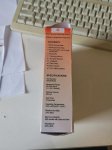
@Deb & Wink hey Deb just noticed if you look at the pic of the box the meter came in it say two code chipes one for dogs and one for cats, just wondering if he has to put the code in for the cats like you have to do on the alpha trak meter, meaning each set of test trips is coded with a number

Good point Diane. You have sharp eyes! Thanks for noticing.
Peter, did you put the correct code chip in the meter? The one for cats? I think it's a physical chip, not a code you enter into the meter, for your batch of test strips.

Worked with Teo from Argentina, and he had a meter that had a physical chip that needed to be inserted into the meter.

It's worth double checking that chip.
 
Good point Diane.
Peter, did you put the correct code chip in the meter? The one for cats? I think it's a physical chip, not a code you enter into the meter, for your batch of test strips.

Worked with Teo from Argentina, and he had a meter that had a physical chip that needed to be inserted into the meter.

It's worth double checking that chip.
Thank you Deb I didn't know some had chips, :cat:
 
I am not sure if Freeze-dried meats for human is available. I think I can find it in pet shop. My concern is, will there be too much bone mineral and unknown ingredients?

Oh, I was talking about the ones you might find in a pet shop! The ones I have here in front of me only list a single ingredient "freeze dried chicken" :). If you can find the ones that are packaged as dog treats, that's usually more economical (they're the same thing as the cat treats, just larger pieces :rolleyes:, and much cheaper).
 
Hi all, for many years Monkey like to go to bathroom or kitchen to drink droplets dropping from the hose, and for many years I do not understand why Monkey is meowing at me few times per day. But when fill water in a bowl, it seems that he hesitate a lot to drink them.

Yesterday, I read that evolutionarily cats like to drink moving water. So today I test the idea. I first gave a bowl of water to Monkey, he did not drink it. Then I pour water slowly from a pot, a water column was formed, Monkey LOVES it, he drank for like 5 minutes. When he meowed me today, I give him moving water again, then he stop pouring.

I have order a water fountain that should arrive within 2 days.

My question is, if he drinks a lot of water, is it perfectly healthy? Also, I heard that cat generally prefers cold water, even icy water, is that true? Is icy water healthy?
 
Cats drinking water is a GOOD thing! It also helps you visually SEE how his diabetes is controlled . It in NO WAY replaces bg testing. BG testing is imperative! But unregulated cats drink a lot of water. GOOD decision on the fountain! Let Monkey drink all he wants! Personally I would just stick to cool to cold water. I live in the low desert. We get some of the hottest temps on earth and NONE of my cats have ever taken to water with ice cubes in it. They wait till the cubes melt away.
 
Cats drinking water is a GOOD thing! It also helps you visually SEE how his diabetes is controlled . It in NO WAY replaces bg testing. BG testing is imperative! But unregulated cats drink a lot of water. GOOD decision on the fountain! Let Monkey drink all he wants! Personally I would just stick to cool to cold water. I live in the low desert. We get some of the hottest temps on earth and NONE of my cats have ever taken to water with ice cubes in it. They wait till the cubes melt away.

Thanks jt! I have started formal blood checking today, please see my spreadsheet. I have two diabetic cat, Monkey and PenPen

The volume of insulin injection is decided by the vet yesterday, and he asked me to see him 2 weeks later to adjust the insulin. However, I would like to see him 1 week later because I want him to adjust the insulin sooner. I think PenPen's BG is not looking good. I am aware that insulin adjustment have to gradual. But may I ask does my thinking make sense? Is that too quick to adjust insulin within a week?

Please comment if I am doing things correctly:
9 am: Check BG, feed, wait for 20 minutes then inject insulin, retrieve the food after 40 minutes.
Then check BG once every 3 hours.
9 pm: Check BG, feed, wait for 20 minutes then inject insulin, retrieve the food after 40 minutes.

Also, the food I am feeding is Royal Canin diabetic feline dry food, and a little bit of fish as a treat. I would like to gradually transit to wet food once I have enough information on their BG.
My question is, everytime I feed, Monkey and PenPen eat a lot, should I allow them to eat until they don't want to eat anymore? I read that it is dangerous of diabetic cats to not eat enough, am I correct? I find that after they are done with dry food, if I give them meat snack, they would still eat them happily. Should I give them more meat snack to make them more full. If they are hungry in the middle of the day, should I give them snack if I still want to get accurate and not spoil them. If yes, what volume and type of snack is safe? Should I limit the variety of snack to one or two item, or should I diversity the snack I give them?

I really appreciate for the help. You people are beautiful.
 
Well I cant give advice on dosing. Deb or one of the others on this thread can speak to that ok?
But I DO know that unregulated cats are ALWAYS hungry. Feed them as much as they want. Once the BG numbers start coming down and get to a level they will process their intake better and they will crave less food. NEVER hurts to give more meat snacks! Cats are obligate Carnivores. Ive never seen a cat strolling through a garden and munching on the veggies. Have you? ;)

And we think YOU are most beautiful for being such a GOOD caregiver for your kitties :bighug:
 
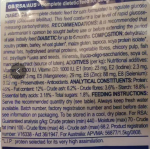
I have to add that... the doctor recommend me to eat Royal Canin diabetic feline dry food, and told me meat may not be good for them. (Ironically, he told me I can buy their diabetic prescription Can wet food. Although I cannot understand because Can wet food is meat, he seems to have OK integrity.

Attached is a nutrition information of the diabetic dry food. It says "This feed contains a low level of rapid glucose releasing carbohydrate" I need to praise them they give out typical nutrition instead of guaranteed analysis. It has 46% protein, 3% fatty acid, 12% fat, about 18% starch, 6% crude ash (Sounds too much?) Sugar 1.8% (WHAT!? Sugar for DIABETIC? CAT?) Ingredients: dehydrated poultry protein(how much?), soya protein (thyroid problem causing?), wheat gluten (I thought it the trend of dry food was gluten free)...

Does my suspection make sense?

I have read a lot of materials linked to this forum, and read scientific literatures such as The carnivore connection to nutrition in cats by Debra L Zoran, who is a vet.

I am convinced that animal protein is good for cat, dry food is bad for cat, because of I believe in evolution and animal should eat things that is similar to the things they eat in nature. However, the vet told me to give them that diabetic dry food but not meat. What can I do with that conflict of ideas? Should I insist? If I insist, how can I work with the vet? What if he insist cats should eat dry food? How can I convince my uneducated family members that I take a approach that is different then the vet?
 

Attachments

  • dry good nutrition.PNG
    dry good nutrition.PNG
    664.4 KB · Views: 119
Last edited:
Hi Peter!

(my last paragraph is the most important, if you want to skip down!)

That's great you got the water fountain! I have one, one of my cats will only drink from that (the other one prefers a human's drinking glass, not a bowl, a glass lol, cats are so funny!). The important thing is that he is getting the water he needs, that is helpful, especially if you continue to feed dry food.

On the food: your vet is misinformed about proper nutrition for a diabetic cat. It's not really his/her fault-- vets do not get a lot of education on the topic in school, then the pet food companies step in to offer advice... In addition, I don't know what it is like in Hong Kong, but in the US vets deal with diabetic dogs much more than diabetic cats, and even though their treatment should be very different, too often vets will just treat cats as if they were very small dogs. You're right to think about different food options, but wait a little longer to switch food, as that can really reduce insulin needs and you currently have no safety margin on that (see next paragraph!).

Now for the most important thing: just looked at your spreadsheet, and wow!!!! That 70, on a pet meter, is very low if you are using Caninsulin!!!! I think you are definitely going to have to reduce the dose. Tagging @Deb & Wink (I know she will stop by, but it looks like you are about to shoot and I want to get her attention!!!).
 
Nan is right and so are you Peter. Dry is bad. The vet doesnt have to know you arent feeding dry. Now if its because he INSISTS you purchase THEIR food. You can always say you found a cheaper source. But HONESTY you SHOULD be able to work with your vet not against him. My fear is you will need to give huge amounts of insulin to compensate for the high numbers. That is no way to manage this disease. Maybe try asking the Vet(AND family members) "Have you ever seen a cat stroll through a vegetable patch just to eat the goodies there?"
You have a lot of people to educate. I just hope they LISTEN and GROW.
GOOD LUCK We are behind you 100% ;)
 
OK, wrote that last paragraph hit "send" on that when I saw your spreadsheet, here are some really important points to emphasize:

1) if you have not yet given a shot tonight, don't until you hear from Deb or another Caninsulin person. If they don't get here in time, my (non-Caninsulin person) advice would be maybe a half dose, 2U, at most.

2) Eventually, you will want to change Monkey's food, but don't change yet, as it could be dangerous while he's getting so much insulin. What I was going to write in my last post, but didn't get to, was that a lot of us have taken the approach with our vet's food advice of "smile and nod when in the office, then feed what you think is best at home". Again, vets don't necessarily get a lot of experience dealing with diabetic cats.

Hey people, I have elaborate my last post, please see if you have any additional comments

It has 46% protein, 3% fatty acid, 12% fat, about 18% starch, 6% crude ash (Sounds too much?) Sugar 1.8% (WHAT!? Sugar for DIABETIC? CAT?) Ingredients: dehydrated poultry protein(how much?), soya protein (thyroid problem causing?), wheat gluten (I thought it the trend of dry food was gluten free)...

Does my suspection make sense?

I think the 18% starch is probably a bigger problem than the 1.8% sugar. I can't speak to the soya and wheat health concerns, except to note that I don't think cats are eating those things in the wild!
 
Monkey's cycle today is a really good example of why home testing is so important! Look at the range he went through!!!!! Any one test, such as one he might have gotten at the vet's office if you had taken him in, would have given a very incomplete picture about what was going on.

As for what is going on: that 70 he got at +5 is quite low. It is just above our "take action" number on a pet meter, 68. "Take action" means to feed some high-carb food or honey immediately in order to avoid hypoglycemia. Even though he didn't quite get there today, you can see why we are concerned that he is getting too much insulin! Especially with an insulin like Caninsulin, that does not leave you a big safety margin.

Right now, what is probably keeping him safe is actually the dry food recommended by your vet! You haven't been able to test to see how low he is getting and give him carbs to counteract, but the food he's eating regularly has enough carbs that it is doing the job on its own. But you don't want to rely on that, plus all the dramatic ups and downs are probably part of why Monkey isn't feeling well. Much better would be to have a smaller insulin dose and better diet. The important thing, though, is not to change the diet first-- it is what is keeping him safe!

I am soooooo glad you have started testing!
 
Hey people, I have elaborate my last post, please add your comment if you have any?
Hi Peter!

(my last paragraph is the most important, if you want to skip down!)

That's great you got the water fountain! I have one, one of my cats will only drink from that (the other one prefers a human's drinking glass, not a bowl, a glass lol, cats are so funny!). The important thing is that he is getting the water he needs, that is helpful, especially if you continue to feed dry food.

On the food: your vet is misinformed about proper nutrition for a diabetic cat. It's not really his/her fault-- vets do not get a lot of education on the topic in school, then the pet food companies step in to offer advice... In addition, I don't know what it is like in Hong Kong, but in the US vets deal with diabetic dogs much more than diabetic cats, and even though their treatment should be very different, too often vets will just treat cats as if they were very small dogs. You're right to think about different food options, but wait a little longer to switch food, as that can really reduce insulin needs and you currently have no safety margin on that (see next paragraph!).

Now for the most important thing: just looked at your spreadsheet, and wow!!!! That 70, on a pet meter, is very low if you are using Caninsulin!!!! I think you are definitely going to have to reduce the dose. Tagging @Deb & Wink (I know she will stop by, but it looks like you are about to shoot and I want to get her attention!!!).

I will read every words you people write:).

70 mg/DL is too low!? This is the amount decided by the vet yerterday. Monkey dose increases from 3.0 U to 4.0U. I need to inject insulin 10 hours later, which is next morning. What should I do? Wait for Deb for advice? Or call my vet urgently to ask?

Fyi, Monkey looks good today, more energetic than when I started to take care of him 2 days ago. Last week he slept in a fix position most of the time, and eyes appear sleepy all the time. (As I said, my parents inject insulin for him, but they do it in a imprecise, lousy manner). Now although he still stay in that fix position, he sometimes stand up and observe people, his eyes opener wider that it looks like he have normal mood. I guess the change may due to 1. I inject insulin correctly 2. I feed him a lot of water so he was less dehydrated 3. I give him meat snack.

I also want to ask, they vet told me if BG is lower than 80 mg/DL, then I should not inject insulin. If BG is slightly higher than 80 mg/DL, such as 90 mg/DL, I can still inject full dose. However, according to Beginner guide to Caninsulin "no insulin is given if the BG is below 200 mg/dL [11 mmol/L] on a human glucose meter", . What should I follow?
 
I also want to ask, they vet told me if BG is lower than 80 mg/DL, then I should not inject insulin. If BG is slightly higher than 80 mg/DL, such as 90 mg/DL, I can still inject full dose. However, according to Beginner guide to Caninsulin "no insulin is given if the BG is below 200 mg/dL [11 mmol/L] on a human glucose meter", . What should I follow?

Peter, Please do not give Monkey insulin if the pre-shot BG (blood glucose) level is <200 mg/dL (11.1 mmol/L). Later, when you have more test data on the spreadsheet (SS) that threshold of 200 (11.1 mmol/L) can be lowered.

But for now, let's keep Monkey safe and not give him any insulin if the BG is <11.1 mmol/L.

What is the pre-shot BG test for this 12 hour dosing cycle? Is this the PM or AM dosing cycle for you?

p.s. When you get a chance, please update the SS with the data from the last couple of days. Last data was from the 5th? I think you have the wrong month in your dates. It should be 4 (April) not 8 (August).
 
OK, wrote that last paragraph hit "send" on that when I saw your spreadsheet, here are some really important points to emphasize:

1) if you have not yet given a shot tonight, don't until you hear from Deb or another Caninsulin person. If they don't get here in time, my (non-Caninsulin person) advice would be maybe a half dose, 2U, at most.

2) Eventually, you will want to change Monkey's food, but don't change yet, as it could be dangerous while he's getting so much insulin. What I was going to write in my last post, but didn't get to, was that a lot of us have taken the approach with our vet's food advice of "smile and nod when in the office, then feed what you think is best at home". Again, vets don't necessarily get a lot of experience dealing with diabetic cats.


I think the 18% starch is probably a bigger problem than the 1.8% sugar. I can't speak to the soya and wheat health concerns, except to note that I don't think cats are eating those things in the wild!

1. Monkey used 3U for 3 to 4 weeks, and yesterday vet increase his dose from 3U to 4U. What do you think about that?

2. Yes, thanks for reminding me to be very careful in reducing his dry food.

3. Yes, starch is bad. I suspect that starch is not the healthiest food even for omnivores like human.
 
p.s. When you get a chance, please update the SS with the data from the last couple of days. Last data was from the 5th? I think you have the wrong month in your dates. It should be 4 (April) not 8 (August).

non-US date system, I think (day/month/year), but maybe a "fill-down" in the spreadsheet that assumed the US (month/day/year). Technology! :rolleyes:
 
Peter, Please do not give Monkey insulin if the pre-shot BG (blood glucose) level is <200 mg/dL (11.1 mmol/L). Later, when you have more test data on the spreadsheet (SS) that threshold of 200 (11.1 mmol/L) can be lowered.

But for now, let's keep Monkey safe and not give him any insulin if the BG is <11.1 mmol/L.

What is the pre-shot BG test for this 12 hour dosing cycle? Is this the PM or AM dosing cycle for you?

p.s. When you get a chance, please update the SS with the data from the last couple of days. Last data was from the 5th? I think you have the wrong month in your dates. It should be 4 (April) not 8 (August).

Thanks Deb. I have corrected the date. :bighug: I injected 4U 2.5 hours ago, which was around 9 pm Hong Kong time. Hong Kong time is 12 hours faster than New York time.
 
70 mg/DL is too low!? This is the amount decided by the vet yerterday. Monkey dose increases from 3.0 U to 4.0U.
[...]
I also want to ask, they vet told me if BG is lower than 80 mg/DL, then I should not inject insulin. If BG is slightly higher than 80 mg/DL, such as 90 mg/DL, I can still inject full dose.

This makes me really worried that your vet does not really treat a lot of diabetic animals. This is really dangerous advice, especially with Caninsulin!!! (Again, probably not exactly his/her fault, but still...)

Can I ask, what is the usual units used for BG in Hong Kong? I'm wondering if there's something lost in translation if your vet is not used to dealing with the (US-centric) mg/dL.
 
Status
Not open for further replies.
Back
Top