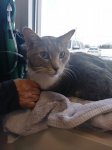
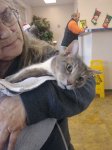
New here! Need help please...

Status
Not open for further replies.

Tritt3180

Member Since 2017
About 6 weeks ago my 11-ish year old cat was diagnosed with asthma when we took him for a wellness check for increased aggression and nighttime vomiting. A lot has changed lately with moving multiple times, work and sleep schedules changing, and family members dying, so a lot of his aggression was chalked up to that, but he was also given famotidine to be given q12° and a steroid shot for his breathing. Instructions were given that of our seemed to help he could get one each month, but we'd have to watch his organ function closer and would need a new baseline bloodwork before getting more steroids.

6 weeks later (Thursday last week), we took him in again for the labs and shot. I got a call Friday morning that his glucose was high and she was concerned he may be diabetic. So, with my permission they ran a fructosamine level on him and it was positive. I was called again at 9pm Friday we needed to come in the next day to learn how to administer the insulin.

Saturday morning my friend commented on how much weight he looked like he lost. I agreed! We took him in early to his appointment because he was very lethargic and not eating. He did make urine that morning, though. We learned he lost 2 pounds in 6 weeks. They showed us how to give sub-q ivf boluses at home and said his sugar was 211, so they didn't want to give him insulin and bottom him out. So we were to just give supportive treatment at home until they were open on Tuesday.

When we got home, he emptied his stomach on the living room floor, most of which was digested, and didn't go near food or water the remainder of the night. I had only been giving him the famotidine if he was nauseas or vomited, so I gave him a ml at 3:30p and watched him. I gave a fluid bolus at 7:30p, and he was just limp. What would've been a growl if he didn't want to be touched was now a weak moan. No more urine was expelled since being home either.

I took him to the emergency dept, and his sugar was >380 and ketones were found in his urine. They admitted him for 1-2 nights last night at 11pm. He did urinate on my mom who was holding him (he tried to find a litter box beforehand) after they catheterized him for the sample.

His last sugar at 0600 was just over 200, he's sitting up and makes it to the litter box (still making urine). The Dr was concerned for pancreatitis, but the test for cats has to be sent out to a lab. Apparently, his lipase and amylase were wnl because the Dr didn't bring them up. He said treatment would be similar to what they're doing now - ivf, and glucose monitoring. I have to call again, but they said that at 0900 they would try some food. He isn't showing interest in water, though, but he has the iv running too. He was really dehydrated when we brought him in.

What does it sound like to you? I have a feeling it is more pancreatitis, but the diabetes/dka hasn't helped the situation. Would it hit him all at once this fast? Could the steroid shot 6 weeks ago made him resistent to insulin and/or caused the pancreatitis? If it is pancreatitis, can I know without that blood test? Also, can I treat that at home?

My cousin recommended this site and said someone here may be able to help me. I just signed up, so I haven't had time to look around the site yet. I just found out how to post. lol

I'm an RN, so I understand medical jargon and am used to being a caregiver to my family. I just feel helpless because I don't really know what to do for cats in this situation.

Thank you, in advance, for any help/understanding you can give.
 
Pancratitis can be treated at home. The treatment is sub q's, cerenia for nausea, and bupe for pain.
 
Hello. Ketones are pretty bad, especially if the levels go up. I use ketone strips for our testing at home.

Here's a link to more information on ketones, ketoacidosis, and blood ketone meters:
Ketones, Diabetic Ketoacidosis (DKA), and Blood Ketone Meters

It sounds like your kitteh may be diabetic. Food is important. That weight loss is critically bad and must be resolved. If your cat is diabetic, then insulin therapy can resolve it. Since your cat is at the emergency vet, I would get as much info as you can from them about the conditions. After all, you are basically paying for it.

Pancreatitis doesn't usually manifest immediately, but it can be treated at home.
 
Steroids often accompany the treatment because of intestinal inflamation. This would include either prednisone or prednisolone.
 
Take your time and read the information at the top of each forum for the different kinds of insulin. Have you been testing his BG? Once you get him home be sure to test him before feeding and giving him his insulin. We will all be rooting for his recovery. Don't hesitate to ask questions.
 
Saturday morning my friend commented on how much weight he looked like he lost. I agreed! We took him in early to his appointment because he was very lethargic and not eating. He did make urine that morning, though. We learned he lost 2 pounds in 6 weeks. They showed us how to give sub-q ivf boluses at home and said his sugar was 211, so they didn't want to give him insulin and bottom him out. So we were to just give supportive treatment at home until they were open on Tuesday.

When we got home, he emptied his stomach on the living room floor, most of which was digested, and didn't go near food or water the remainder of the night. I had only been giving him the famotidine if he was nauseas or vomited, so I gave him a ml at 3:30p and watched him. I gave a fluid bolus at 7:30p, and he was just limp. What would've been a growl if he didn't want to be touched was now a weak moan.


I'm sorry to hear that your little one has been in the wars.

So, with my permission they ran a fructosamine level on him and it was positive. I was called again at 9pm Friday we needed to come in the next day to learn how to administer the insulin.

If the vets didn't run a ketone test at the same time that was remiss of them. Ketones can build up really quickly and major clinical signs of ketosis include lethargy, nausea, inappetence and dehydration. It's true that pancreatitis has a very similar symptom profile but ideally you'll need to ask your vet to make a differential diagnosis as pain management and possibly antibiotic treatment may be needed if pancreatitis is present. If your vet offers it, an in-house SNAP fPL blood test will give an immediate Yes/No result to indicate whether or not the pancreas is inflamed. To assess the severity of inflammation a Spec fPL blood test should be run (needs to be sent to an external lab - results usually take a few days to come through). If required an ultrasound of the pancreas can be performed. Here is a very helpful link about pancreatitis diagnosis and treatment:

IDEXX Labs - Pancreatitis Treatment Guidelines

Famotidine isn't ideal as an anti-nausea treatment: it reduces stomach acid production (as you probably already know) but ondansetron and Cerenia are much more effective treatments for nausea in felines. Here is helpful information on a variety of anti-nausea and appetite stimulant treatments:

Nausea, inappetence, vomiting - symptoms and treatments

When DKA and/or pancreatitis symptoms are at their most acute then the cat may require both anti-nausea and appetite stimulant medications. Based on my own experience of managing a cat with chronic pancreatitis and also reading about many cases of cats with DKA here on this board I cannot recommend strongly enough that when you go to collect your kitty to bring him home that the vet provides you with the following meds for continued home treatment at minimum:

- a 'proper' anti-nausea medication (ondansetron, Cerenia), not a mere acid blocker.

- an appetite stimulant. (For cyproheptadine, check that liver function and blood pressure is OK. NB: if buprenorphine is prescribed for pain note that co-administration of mirtazapine can produce a highly adverse reaction in some cats due to effect of combo on serotonin levels.)

Needless to say, in addition to inappetence being a major issue for an otherwise healthy cat, inappetence in a diabetic cat who needs insulin makes for a massive treatment complication. It's critical to keep a kitty eating when recovering from DKA. We've seen many, many cases here where kitties get stabilised at the vets only to be discharged too soon and then they quickly relapse because the treating vet fails to prescribe appropriate supportive meds for the caregiver to administer in the home setting. Some vets prescribe only an appetite stimulant but that's not enough: effective nausea management is key to a successful treatment outcome. Your cat may start eating without supportive medication BUT it is far better to have an on-hand supply of meds available so that one can respond immediately to signs of nausea/inappetence than being forced to wait for another vet visit before starting treatment.

If pancreatitis is also a factor then pain management may be necessary. Pain levels may vary (cat may show some signs of discomfort after eating or, in more severe cases, more marked abdominal pain may be present - and pain may radiate to the back). Buprenorphine is commonly prescribed for management of pain associated with pancreatitis flares. A course of B12 injections can help resolve a pancreatitis flare and improve appetite. Please refer to the IDEXX document for comprehensive coverage of meds that may be used to treat pancreatitis/nausea/inappetence.

With DKA in the mix then, in addition to home testing blood glucose levels, it is very important to check daily for ketones in the urine (using Keto-diastix or other urinalysis strips featuring a ketone test). More helpful links here:

Are you testing for ketones?

Urine testing tips

If your cat is underweight then extra caution is needed when choosing a suitable food. Underweight cats may need a somewhat higher carb load than the usually recommended <10% to reduce the risk of their going too low when they start insulin treatment (even on a tiny dose). This is even more important in cats who are ketone-prone. The somewhat higher carb load may allow for larger doses of insulin to be administered and also promote faster regaining of weight that has been lost. Once they regain the necessary weight to restore ideal body condition and stabilise on insulin one can then revisit and optimise dietary choices for long-term diabetic control.


Mogs
.
 
Last edited:
Ok... I've done my best to collect info you've shared and ask my questions this last call. Here is where we are:

1615 update: There hasn't been a differential diagnosis made yet. They started an insulin drip at 3p of Humulin-R. His urine today showed 2+ ketones.

No appetite stimulant has been given, but the tech i spoke to said he will ask about one since its been >24° without eating. They cannot do tpn in their office because thats more of an inpatient order than "emergent."

A long term antibiotic was given last night at 11p when he was admitted. That should last about 14 days I'm told. I don't know the name of it.

They gave him Cerena for nausea, but cannot repeat it until tonight as it is a 24° drug. The tech didn't think he could have zofran intermediately (I don't understand why because in humans we can give other meds between zofran doses).

No pain meds were given since he was so out of it, but the tech said he'd ask about trying a dose. His vitals don't indicate pain, but i keep thinking of patients I have had where vitals are not the best pain indicators. They didn't want to make him more drowsy, and he seems more alert, but really depressed. I'll ask when I call back in a couple hours if it might help to see us and if its possible, take a drive out there.

The test for pancreatitis is a lab that needs to be sent out to confirm pancreatitis. There isn't one in house for cats - just dogs. They do not do ultrasounds here unless its a life or death situation. So, this will not be able to be diagnosed at this facility.

What do I do next other than pray? Also, what kinds of questions do I need to ask next time I call?
 
It is important for your cat to ingest food. Since there are ketones, that will help break the ketone cycle.

If your cat was eating fairly well at home, but is not eating at the vet center - you should consider options.
- syringe feeding
- or taking him home so he will start eating

We had an esophagus tube put in Leo in mid-2017, for about 4-6 weeks. He got diagnosed with small cell lymphoma. The subsequent prednisolone treatment (daily) helped with hunger stimulation. Prior to e-tube, we did syringe feeding.
 
If they let you visit him, ask if you can leave him something (a t-shirt, towel, etc.) that smells like you. It might help relieve his depression a bit-- he must be very confused right now at where he is.

Have they been syringe-feeding him at all? He definitely needs some insulin to get rid of the ketones, but he needs food too. Have they given any fluids since the ones you did last night?

I'm guessing that the antibiotic was Convenia?
 
- or taking him home so he will start eating

I would be very cautious about taking him home while there are still substantial ketones in play. Ketones are difficult to treat at home, and can worsen dramatically very very quickly.

An e-tube might be an option later if he continues to not eat on his own for a while. They can be lifesavers!
 
They had him on ivf... Not sure if they're still going now that the insulin drip is going. I would imagine they are. And no, they haven't given him any food. They've offered it, but haven't syringe fed him yet. The tech said he will ask the Dr about that. So, I'm hoping they will. I'll be calling in about 1.5 hours so they can have the next sugar reading checked. Good idea about the shirt/towel. I'll ask that too. Thanks Man & Amber! He was eating, but not great since he had the last steroid shot Thursday. Saturday he threw everything up when we came home from the vet at 3:30pm. He hasn't eaten since. So, hopefully they syringe feed him. I can't take him home yet as he's on the insulin drip due to still being in DKA. Argh!! It's such a vicious cycle!!
 
What's an E-tube? Like a nasogastric tube for humans? Or is it a surgical placement like a gastric tube for humans? I have no qualms about doing feedings at home if it can be reversed.
 
The e-tube goes in the side of the neck into the esphagus and is routed directly to the stomach. Leo was a trooper while he had it in.
 

Attachments

  • Little Dude and Leo 2017-07-04b.jpg
    Little Dude and Leo 2017-07-04b.jpg
    59 KB · Views: 118
A long term antibiotic was given last night at 11p when he was admitted. That should last about 14 days I'm told. I don't know the name of it.
Convenia perchance?

See the IDEXX document linked above for guidelines on appropriate antibiotic treatment for pancreatitis.

Both DKA and severe pancreatitis can make a kitty lethargic/depressed. Both can make the cat feel really lousy. If I were in your shoes I'd be looking to visit with my cat. I think it's a comfort to them while they're hospitalised and also, even if the hospital staff can't get your kitty to eat much at the moment, your kitty might be a bit more encouraged to eat a little bit for you when you visit. Maybe bring a t-shirt or jumper with your scent on it to pop into your kitty's kennel for comfort and reassurance?

I second the recommendations above about syringe feeding in the interim and enquiring straight away about feeding tubes. If a feeding tube is needed it is better to act sooner than later - see this vet-authored page about feeding tubes.)

catinfo.org - Feeding tubes

Timely deployment of a feeding tube has saved the lives of DKA kitties here.

Again, I can't stress the importance of anti-nausea support. I found that Cerenia might give some bit of an uptick in interest in food but I found ondansetron to be more effective overall, although it took about 24-36 hours to reach full therapeutic effect in my girl.


Mogs
.
 
So, am I looking at having to admit him somewhere after his stent is through at this emergency facility if he doesn't respond to the drip?
 
I would be very cautious about taking him home while there are still substantial ketones in play. Ketones are difficult to treat at home, and can worsen dramatically very very quickly.
Strongly second this.

Your kitty needs to be ketone-free with electrolytes normalised before coming home. And eating. As Nan quite rightly says, DKA really needs intensive treatment in a hospital setting.

Sending prayers for a speedy recovery to your little one.


Mogs
.
 
So, am I looking at having to admit him somewhere after his stent is through at this emergency facility if he doesn't respond to the drip?

You mean to do a feeding tube? I'd think that the emergency facility could probably do that, although you/they might prefer your own vet to handle it for one reason or another (cost, for example). Something to ask about when you talk to them.

Hope you get to see him soon and that it perks him up a bit. Poor little guy, he must be feeling pretty yucky with all of this going on...
 
Above advice is correct. A small amount of ketones can be handled at home. But once the levels go up, it is critical care. The ketones need to get flushed.

The feeding tube should come after other emergency measures, which you are doing. I would have them try syringe feeding first. It could stimulate more eating. In Leo's case the syringe feeding did not work very well. The goal is to get some food into the cat and restart the normal process
- eat
- process into glucose
- soak up glucose into cells with insulin
- stop body from processing fat into ketones
- resume normal kidney regulation of blood

Some cats won't eat at the vet at all. Little Dude was at the vet this year, after a cat fight. He didn't eat at the vet for 6 or 7 days, and he lost all his fat. Don't worry, he gained it all back:eek:
 
If they let you visit him, ask if you can leave him something (a t-shirt, towel, etc.) that smells like you. It might help relieve his depression a bit-- he must be very confused right now at where he is.

Have they been syringe-feeding him at all? He definitely needs some insulin to get rid of the ketones, but he needs food too. Have they given any fluids since the ones you did last night?

I'm guessing that the antibiotic was Convenia?
I left the shirt I slept in last night. He snuggled up to it.
 
They do have ivf running still with the insulin. He's not"looking" and better - his eyes are half open and he doesn't appear to be interested in much. Laying with his head facing the back of the cage, but he knew that we were there. We got to pet and talk to him, but not hold him. He would eat the tiny bit of food I put on my finger, but he licked his lips when I pulled the finger away. The vet tech that was with him all day called before leaving to tell me he ate a tsp of food after they changed it. So, they're not going to force feed him in the case of pancreatitis. He also got pain med around that time. He was laying in his litter, so they removed it and put a towel in it's place.
 
I'm glad you got to see him, but worried at this report.

He needs more than a couple tsp of food. It's not the pancreatitis that is the concern right now, it's the ketones, and for that he really really needs to get some calories into him. Syringe feeding isn't fun for anyone, but sometimes it is necessary, and I do not understand why this vet is so casual about the situation.

I hope the tsp he ate on his own is a sign of a change-- sometimes you just have to get them started and then they feel better enough to keep eating on their own, so maybe that's why the vet is not very concerned?
 
he licked his lips when I pulled the finger away.
Sounds like nausea.

He needs more than a couple tsp of food. It's not the pancreatitis that is the concern right now, it's the ketones, and for that he really really needs to get some calories into him.
I could not agree more: part of the DKA treatment protocol (fluids, anti-nausea, appy stimulant) should have an automatic knock-on benefit for any pancreatitis present, but to treat DKA successfully the cat must get enough food and insulin to clear out ketones and restore normal glucose metabolism.


Mogs
.
 
I will try to talk the vet tech into trying more pain meds then syringe feeding when I call again. It's a different one than earlier, but the same one that was with him last night. Fingers crossed... They had said before they were hoping the little bit he ate was a sign he would eat more, but I have a feeling he was just tasting it, and the pain med didn't have time to kick in before it reached his digestive system. Hopefully tonight is different. We have until Tuesday 6am before I have to take him home, or somewhere else.
 
You mean to do a feeding tube? I'd think that the emergency facility could probably do that, although you/they might prefer your own vet to handle it for one reason or another (cost, for example). Something to ask about when you talk to them.

Hope you get to see him soon and that it perks him up a bit. Poor little guy, he must be feeling pretty yucky with all of this going on...
No, I meant by "stent" does it sound like I need to figure out where to take him when he can no longer stay at the emergency dept.
 
Question: if his glucose is not regulated by the time he needs to leave the ER, what is the protocol? I have to work till 5p, but would have to take him home by 7am. I'd need to take him earlier to make it to work on time, but would need to put him in a hospital to regulate the insulin drip while I'm at work until we can take him to a bigger hospital where he can be admitted... Which is 1.5 hours away when the roads are good. Will my personal vet be able to do that for me? Will I need to take off work for an appointment, or would they have appointments in the evening? I feel kind of at a loss of what to do next.
 
2150 update: Cat's glucose went back up to 385, so the drip was increased to 5ml/hr from 4ml/hr.

He's not eating. I have asked that they give him onadesterone (zofran) until he can have the other med again. The tech will talk to the Dr.

The previous tech said he ate and got pain med at "about the same time." This tech tonight found in his chart that he tried eating at 4p and got the pain med at 6pm. NOT at the same time!! Pancreatitis is PAINFUL, so it's no wonder he didn't eat more when it caused him pain! So, I asked to give him the zofran and since the pain med should be working by now (supposed to have a 8-11 hour span it works) to try and syringe feed him.

I'm super frustrated... WHY DO I HAVE TO ASK FOR ALL THIS STUFF??? I know I'm not a vet, but they seem to agree with my recommendations when made. So thankful for friends to guide my questions.

I did learn, however, that Forest South should be able to get him regulated at their facility and I won't have to go to U of I or somewhere far like that once he leaves the ER.

I have a headache.
 
2150 update: Cat's glucose went back up to 385, so the drip was increased to 5ml/hr from 4ml/hr.

He's not eating. I have asked that they give him onadesterone (zofran) until he can have the other med again. The tech will talk to the Dr.

The previous tech said he ate and got pain med at "about the same time." This tech tonight found in his chart that he tried eating at 4p and got the pain med at 6pm. NOT at the same time!! Pancreatitis is PAINFUL, so it's no wonder he didn't eat more when it caused him pain! So, I asked to give him the zofran and since the pain med should be working by now (supposed to have a 8-11 hour span it works) to try and syringe feed him.

I'm super frustrated... WHY DO I HAVE TO ASK FOR ALL THIS STUFF??? I know I'm not a vet, but they seem to agree with my recommendations when made. So thankful for friends to guide my questions.

I did learn, however, that Forest South should be able to get him regulated at their facility and I won't have to go to U of I or somewhere far like that once he leaves the ER.

I have a headache.
I’m so sorry you have to go through all of this. Bless you for being the voice of your kitty, and an advocate for his care. As others here have posted, and I continue to see evidence of in the stories of other people on this board, the unfortunate fact is that many vets lack the knowledge and experience to provide best practice medical care for our sugar babies. Hoping and praying they can get him over this rough patch and back on track :bighug:
 
The critical issues are:
- ketones
- lack of food
- high BG, requiring insulin

in that order. If your cat eats, they should record the exact amount. If you are working, but you can afford to leave him under 24/7 care, then you should check him into the other facility.

I don't know about Forest South, but I hope they can resolve these issues for you. Yes, it is very frustrating. You and only you - are the best hope for your cat. The more interest and interaction you have with the vet techs, then generally the results will be better.
 
0100 update: zofran was given, finally, at 1015. The tech said she doesn't remember what time it was, but she walked by twice for something (like his pump was beeping or something and she had to fix it) and she saw him eating on his own both times. She didn't do his treatments, and didn't record how mich he ate. No syringe feedings were given. Now to keep the pain and nausea away so he can continue this.

I forgot to ask... Anyone know how often zofran can be given?
 
0100 update: zofran was given, finally, at 1015. The tech said she doesn't remember what time it was, but she walked by twice for something (like his pump was beeping or something and she had to fix it) and she saw him eating on his own both times. She didn't do his treatments, and didn't record how mich he ate. No syringe feedings were given. Now to keep the pain and nausea away so he can continue this.

I forgot to ask... Anyone know how often zofran can be given?
That's very hopeful news
 
0100 update: zofran was given, finally, at 1015. The tech said she doesn't remember what time it was, but she walked by twice for something (like his pump was beeping or something and she had to fix it) and she saw him eating on his own both times. She didn't do his treatments, and didn't record how mich he ate. No syringe feedings were given. Now to keep the pain and nausea away so he can continue this.

I forgot to ask... Anyone know how often zofran can be given?
I believe zofran can be given every 8-12 hours as needed. Is he on bupe for pain yet? When my cat was diagnosed with pancreatitus the bupe made a huge difference. He was eating within a half hour of taking it.
 
0500 update: Cat ate half of the food he was given around 0300! His glucose came down from 352 to 285(?) at 0300 also. He ate on his own. He's due for more pain meds and zofran, but they don't feel he needs them at this point. I disagree. Hopefully we're not going to go backwards again. I'll call before shift change (7am) again.
 
0500 update: Cat ate half of the food he was given around 0300! His glucose came down from 352 to 285(?) at 0300 also. He ate on his own. He's due for more pain meds and zofran, but they don't feel he needs them at this point. I disagree. Hopefully we're not going to go backwards again. I'll call before shift change (7am) again.
I agree with you they need to continue the pain meds a few more days. My Zimmy took bupe 5 days. The cerenia (like zofran) I think I have him 3 days.
 
I'm sorry you seem to be caught up in having to direct the treatment yourself. My kitty had a bout of DKA two months after his FD diagnosis. To say that I knew nothing about the complications of diabetes is an understatement. I was so lucky that my regular vet clinic has ER ICU facilities and vets there 24/7. Looking back, I can see that they knew what to do for DKA: hydration, electrolyte balancing, insulin (fast-acting as needed) and food.
 
Last edited:
I called back and he hasn't gotten any more bupe. He was due at 0600. :-( He got zofran at 11p, so he could get it, but hasn't yet. I asked as soon as he could have these meds to give them to him. He only started eating after receiving them and I don't want to go backwards.

His glucose was in the 230's at 0600 so they are removing the insulin drip and going to wait for the glucose to increase more and try injections again. The tech I'm familiar with at night said when another tech was trying to check his temp he started to growl. Much better than a moan or nothing at all!!

To say I appreciate your help with all of this is an understatement. I don't think he could've gotten this far without you guiding my questions.
 
1000 update: Insulin drip was stopped at 0800 and his 0900 glucose was 243 (from 235). He received his pain med at 8/9am and will be getting his zofran here within the hour. He has not eaten on his own since 3a (when he ate half the food), but he did get syringe fed around 6a. They will try to syringe feed him a little at noon if he isn't eating on his own by then.

I feel like I'm getting different stories from different people, and that is frustrating. Turns out the person who told me Cat ate and got pain meds about the same time, when he really ate a tsp at 4 and got pain meds at 6p, was a Dr... Not a tech. And the person I thought was a tech all last night I'd been talking to was a Dr, too. She said he hasn't been syringe fed at all, but the tech I talked to this morning said they try to syringe feed here and there when checked. So confusing!!!

Going up to see him after lunch.
 
Yes, that is quite a ride. Sounds like he was doing pretty good at 10am though. I hope the improvement continues.

It's important to keep the interest level up at the vet. The squeaky wheel does get the most attention. And they need to start recording the amount of food ingested. That's important.
 
Really glad to hear that the ondansetron has been helping your cat to get some bit down. I found it to be a godsend - and a life-saver.

Ondansetron dosing from my vet (for a 10lb cat): 1-2mg q8-q12 (to a maximum of 4mg per day - e.g. doses of 1mg/1mg/2mg 8 hours apart).

(For general info, it is possible to give bupe once every eight hours in cases of severe pain. ETA: may need to tweak the bupe dose a bit lower if administering TID.)

When Saoirse had very bad nausea I found that the 2mg q12 dosing for several days helped her to stabilise and get back to regular eating. Thereafter I'd try titrating down to 1mg q12, then 1mg q24. If her nausea symptoms became more marked (e.g. lip licking or making 'yawny' faces after trying to eat; licking the food a little bit then walking away) I'd up the dose again straight away, no messing. Sometimes I'd give 1mg in the morning (because I could monitor her better during the day) and then give her a 2mg dose to see her through the night. (I have a sleep disorder and take meds, so I'd use a timed feeder to dispense her night time meals.) I learned not to attempt to withdraw the anti-nausea support until she had been eating steadily and in sufficient quantity for a reasonable period (talking days to weeks here, not hours).

Note: keep an eye on regularity and consistency of bowel movements. Both bupe and ondansetron may be a little constipating, and constipation can make nausea worse.

Granted I was dealing solely with pancreatitis issues (thankfully Saoirse was never prone to throwing ketones) but I found that the thing to aim for was to keep her eating little and often, and during a flare that meant keeping her on the anti-nausea meds for several weeks (with pain relief as needed, especially in the earlier, acute phase of the flare). If too many hours go by between feeds stomach acid can build up in a kitty's tum. This just exacerbates the nausea and can quickly lead to inappetence again.

When Saoirse had her first (really bad) flare it was a nightmare for both of us (vet had prescribed metoclopramide - great for short courses if poor gut motility leads to constipation but pretty much useless for longer term , non-constipation-related nausea management since cats have very few of the receptors it targets). It was only when members here recommended ondansetron and I pestered the vet to prescribe it that Saoirse started eating better - and steadily. I was beyond grateful for the recommendations made by members here - I don't think I would have even heard of ondansetron were it not for their input and they helped to save Saoirse's life. It is both frustrating and downright scary being put into the position where one has to work so hard to direct one's kitty's treatment but I'm certainly grateful that your little one has such a marvellous and loving advocate in you.

If I were in your position I'd be inclined to work with the vets to keep the anti-nausea meds going (and pain relief if needed) until my cat was well out of danger and properly stabilised. Even then I'd look to gradually titrate the meds down to ensure a solid recovery. I'd do my darndest to make sure I got a supply of anti-nausea and appetite stimulant meds to take home when my cat was being discharged because one thing I've learned is that it is much better for a kitty to be able to give anti-nausea meds at home ad hoc; it can help to stop a potential relapse or recurrence in its tracks. It can take a bit of time for a cat to recover from a severe GI upset. (We've seen DKA cats here who had been successfully stabilised in the hospital setting only to relapse into another DKA episode requiring a second hospitalisation shortly afterwards - and all because they were sent home without a supply of supportive meds to help keep the kitty eating.)

I'm glad that you've found somewhere to continue your kitty's hospital treatment. What's the latest on ketone/electrolyte levels?


Mogs
.
 
Last edited:
2130 update: Glucose was 336, but no insulin was given. I believe I was told he won't get any until he's >350. Still seems super high to me, but I'm also told cats tend to drop out of nowhere and go hypoglycemic really fast. So, they don't give insulin until he hits 350. 250-350 is his supposed sweet spot.

Still no real interest in eating on his own yet. He ate a little for me after I syringe fed him earlier today when I visited him, but I also put the food right in front of him. They have been syringe feeding him some, though, I'm told.

They are holding his bupe right now because there's no sign of him being in pain yet per his vitals. Also, he will get his zofran within the half hour as scheduled.

He's still making urine, and his metabolic labs were good other than his sugar level. They tested him yesterday for ketones, so they're only going to do that one time as they've told me it may take days for the ketones to be out of his urine. Will talk more with his vet tomorrow about this.

The tech earlier today mention our vet putting in an e-tube (a temporary feeding tube that inserts into his esophagus) until he is able to eat more on his own. They do not do that at this ER.

The gap in my updates is largely due to us being at the hospital for 4 hours today. We waited 2 hours to be able to see him (after driving almost an hour to get there and an hour back) because so many pets were being brought in. It was just too busy. We got to spend 2 hours in the waiting room with him though! He was a different cat than when we saw him last night!! He is still weak, understandably. He stood to change positions a couple times. Like I said before, he took some liquid from the syringe, but then ate some from the bowel when the food in the syringe was too thick to push out. He curled up on my chest and snuggled for a good while (one of his fav spots). At one point he was purring. He didn't really wag his tail, but his eyes were wide open and super bright when he first came out until he got sleepy. At the two hour mark, they hooked him back up to his ivf. Super thankful for that time they gave us!!

Lots to talk to the home vet about tomorrow after his ER discharge. Will be going to pick him up early in the morning so he can be at the vet in time for me to make my own occupational therapy appointment before work. The ER tech/Dr (idk) said he'll be admitted right when our home vet opens, so that's what I'm banking on. Thankful they are a VCA facility!
 
Last edited:
They tested him yesterday for ketones, so they're only going to do that one time as they've told me it may take days for the ketones to be out of his urine.
If they're doing regular blood tests they should be able to include a ketone test in that.

FWIW, going forward with a ketone-prone kitty it is well worth considering investment in a blood beta ketone (BBK) meter. The strips ain't cheap by any means but it makes it so much easier to monitor ketone status. I was very pleased with my one. If you streamline your testing set-up you can get your BG test and BBK test from the same blood droplet (and it saves an awful lot of messing around trying to catch urine samples). Checking blood ketone levels can also act as an early warning system; the ketones will show up sooner in a blood test than a urine test.

I'm delighted that you all got to spend time together today and to hear that he is perking up in himself. Sending some 'get well soon' scritches for your little fella. What's his name?


Mogs
.
 
If they're doing regular blood tests they should be able to include a ketone test in that.

FWIW, going forward with a ketone-prone kitty it is well worth considering investment in a blood beta ketone (BBK) meter. The strips ain't cheap by any means but it makes it so much easier to monitor ketone status. I was very pleased with my one. If you streamline your testing set-up you can get your BG test and BBK test from the same blood droplet (and it saves an awful lot of messing around trying to catch urine samples). Checking blood ketone levels can also act as an early warning system; the ketones will show up sooner in a blood test than a urine test.

I'm delighted that you all got to spend time together today and to hear that he is perking up in himself. Sending some 'get well soon' scritches for your little fella. What's his name?


Mogs
.
Thank you, Critter Mom! His name is Ringo, but he responds better to Cat or Kitty Cat. lol I'm pretty sure he was owned previously, but was a stray for a while, too. My brother adopted him from our vet. Ringo never stuck with him, so it's more of a formality I guess.

I'll look into the kit. Thanks for the suggestion. Did you buy yours on Amazon?
 
Status
Not open for further replies.
Back
Top