Do people free-hand lance?

Status
Not open for further replies.

Amy Dobson

Member Since 2015
Do many people use the lancets on their own, without the use of a punch machine? Is is relatively easy to do or can you cause more damage to the skin?
Thanks,
Amy.
 
Some folks use the lancet pen, and some prefer just to use the lancet on it's own. It really does just come down to personal preference.
I've always used the lancet pen (tried 'freehand' but it didn't work for me).
 
I free-hand with the lancet, using a 45 degree angle. I do sometimes go right through the ear, but my Tuxie doesn't seem to care. I found with my kitty that the noise of the click upset him too much..he tends to be very skitty about things. I have been free-handing since almost the start and for me anyway I feel I have more control over the poke. Other people do just fine with the device, so whatever works best for you and your kitty.
 
I use the lancet pen. I tried freehand but my cat moved when the lancet was i the ear and ripped the tip a little and it did bleed a lot.
Some lancet pens work better than others I have found out. If you pen came with a clear cap (used for human alternate site (other than finger tips)) try using that.
 
I lance freehand. It's actually easier for me to control than the big, awkward pen-thing. And Chester never liked the click right in his ear. I just hold the lancet at an angle to his ear and poke. Works great.
 
Freehand here too.

Just recently someone brought to my attention that lancets are beveled (duh!) :facepalm:. It definitely helps to make sure the bevel is facing up, so the point of the lancet hits the ear first.

Also, decided to try a slightly different technique a couple days ago. Now I lay the lancet flat on the ear, bevel up, while pinching the ear and lancet together I use my other hand to slightly bend the ear into the lancet tip. It just takes a tiny poke. Sometimes you have to "milk" the ear a bit to get the blood to pool. It can be a slightly delayed reaction.

I feel like my accuracy has improved by holding the lancet stationary and bending the ear into the lancet tip. Better control, I should say.

It definitely gets easier with repetitions. Good luck :)
 
Brilliant to read these experiences and tips, it's hugely appreciated. I've bought some cheaper lancets to try free hand, but have also bought the more expensive ones for the pen in case it doesn't work out. I've a feeling I might wean off the pen.
Thank you for your replies :cat:
 
If you free hand, which product do you use? I am looking at ReliOn Confirm and ReliOn ConfirmMicro. What's the difference?

Or do you just buy the lancet pens/lancets? If so, which brand do you buy?
 
Last edited:
The Confirm Micro meter is smaller - about 3 inches long, 1.5 inches wide, and 3/4 inch thick (I'm guessing) It fits into my small hands well.

Lancets are a separate purchase. Get ones for alternate site testing (25-28 gauge) to improve your success in drawing a drop of blood.
 
The Confirm Micro meter is smaller - about 3 inches long, 1.5 inches wide, and 3/4 inch thick (I'm guessing) It fits into my small hands well.

Lancets are a separate purchase. Get ones for alternate site testing (25-28 gauge) to improve your success in drawing a drop of blood.

For lancets, what brand do you recommend?

What do you mean by alternate site testing? Thanks
 
Last edited:
Human diabetics used to test solely on the sides of fingers. Now, they can test in other areas. This can require a slightly smaller gauge / thicker lancet to get a useable blood drop.
I bought whatever was inexpensive at WalMart, where I got the syringes.
 
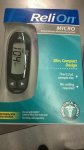
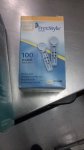
WP_20150531_001-1.jpg WP_20150531_002.jpg Are these what most of you use whether you free hand or not? Am I missing anything to check BG levels in my cat?
 
Last edited:
I use the exact same lancets and I freehand....but if you use a device, you might have to buy the one that goes with those lancets (some are interchangeable, some are not)

And I use the Confirm, but it's the same as the Micro you have there except the meter is a little bigger..either one is a great meter

Don't forget to get matching strips for whichever meter you buy

Here's a complete shopping list
1. Meter ie Walmart Relion Confirm or Micro.

2. Matching strips

3. Lancets - little sticks to poke the ear to get blood . new members usually start with a larger gauge lancet such as 28g or 29g until the ear learns to bleed. Optional - lancing tool.

4. Cotton balls to stem the blood

5. Neosporin or Polysporin ointmentwith pain relief to heal the wound

6. Mini flashlight (optional) - useful to help see the ear veins in dark cats, and to press against

7. Ketone urine test strips ie ketodiastix - Important to check ketones when blood is high

8. Sharps container - to dispose of waste syringes and lancets.

9. Treats for the cat - like freeze dried chicken

10. Karo syrup/corn syrup or honey if you dont have it at home - for hypo emergencies to bring blood sugar up fast

11. A couple of cans of fancy feast gravy lovers or other high carb gravy food- for hypo emergencies to bring blood sugar up fast
 
Chris & China,

What am I missing from your list above for testing my cat's BG levels? Do I also need to buy matching strips or lancets?

Can tissue be used instead of cotton balls?

Since my cat loves to lick her ears, any suggestions for an alternative to neosporin or polysporin ointment? I am concerned if my cat ingests the ingredients from these items.

I am still confused with free hand vs the traditional way (lancet?) and want to start the easiest, least stressful way, if that's possible.
 
Last edited:
Freehand just means holding the little lancet in your fingers instead of using a special "device" ...I find it easier because I know exactly where I'm poking.

Yes you also need matching strips for the meter you buy

Yes you can use tissue instead of cotton balls...I use cosmetic pads called "Swiffers" from WalMart and like them, but you can use anything.

You use a very tiny amount of the Neosporin with pain relief ointment...not enough to hurt them if they do happen to ingest a little

Don't forget some Karo syrup (or pancake syrup or honey) and a few cans of high carb food (like Fancy Feast Gravy Lovers)
 
This is a "lancet device", but you don't HAVE to use one. Some people like them, others don't (there are lots of different kinds of devices)

As you can see, she puts the LANCET into the lancet device....if you don't use the device, you just hold the actual lancet with your fingers

 
What kind of matching strips do I need for the meter? Do any fit the ReliOn meter?

I am assuming from the second photo I posted above that the gauges are the lancets (?)

Video:
 
Last edited:
The photos above have a picture of the Relion MICRO blood glucose meter, and a box of lancets ....No "lancet device"

You need to also buy the Relion MICRO blood glucose strips @Cat Ma

Ask someone in the pharmacy to help if you can't find them

in the video you posted, they are using a regular syringe needle to "freehand poke" instead of a lancet
 
Chris & China,

Do you poke your cat's ear from inside or from the outside?

Are readings on the ReliOn meters the same as on an AlphaTrak? I gather the ReliOn supplies are cheaper?

Once I get a BG reading, do I record it on a spreadsheet?

Finally, do I need to do a BG reading each time before my cat eats or can I do it when I see changes in behavior or insulin dose?
 
Last edited:
You can poke either side of the ear...blood is blood and it doesn't matter where it comes from :)

The reason most of us use human meters is due to the cost of the strips....the AlphaTrak strips can cost more than $1 EACH....the Relion Micro strips are $35.88 for 100 (which is a big savings)

The readings aren't the same, but the people here are used to dealing with human meters and will understand those numbers best anyway

Yes, once you get a BG reading, you record it on our spreadsheet. Do you have the link to download our spreadsheet program? It's a specific program that's color coded to help us understand

You should test before every shot (the AMPS and PMPS are the AM Pre-shot and PM Pre-shot) to make sure they're high enough to give insulin at all, then at least one test during the AM cycle around +5 to +7 (5 to 7 hours after the shot) and at least a "before bed" shot on the PM cycle
 
How often should I show the numbers/spreadsheet to the vet?

The spreadsheet link would be helpful. Thanks

China's numbers look really good if I am reading her spreadsheet right. What insulin do you have her on?
 
Last edited:
China is on Lantus

Here's the link to "How to create a spreadsheet"

Whether you show your spreadsheet to your vet or not is your choice. I haven't shown my vet our spreadsheet for over 2 years now. I get all my dosing advice from the people here since they have years of experience ....my vet has seen less than 10 diabetic cats in their entire career
 
I use the exact same ones you have in your picture above....they're 28 gauge

Since China's ears have "Learned to bleed" I could probably use a higher gauge (like 31 to 33...the higher the number, the smaller the "hole" it makes) without any problems too but I like those best...they seem "sharper" than the Relion lancets did
 
The reason most of us use human meters is due to the cost of the strips....the AlphaTrak strips can cost more than $1 EACH....the Relion Micro strips are $35.88 for 100 (which is a big savings)

The readings aren't the same, but the people here are used to dealing with human meters and will understand those numbers best anyway

I saw somewhere the Freestyle strips can be used with AlphaTrak 2. Since the AlphaTrak is tailored for pets, wouldn't that be easier for me and the vet to read? The vet is familiar with the AlphaTrak.
 
I've seen that too, but the Freestyle strips aren't a lot cheaper...if you can afford it though, that's fine

Some vets are OK with using human meters...some are not...depends on the vet, although a lot of times people take their human meter into the vet and compare it (most of the time it's pretty close the the same numbers)
 
I bought some lancets from eBay that work perfectly with the Alphatrak 2 pen. They were ÂŁ4.99 for 100, so if anyone in the UK wants to know the item number, do let me know.
Amy.
 
See my signature link Glucometer Notes.

My vet is fine with BG home testing though doesn't see a need for daily testing. Your thoughts? I'd assume with fluctuations in BG levels, daily testing would be a must.
 
Last edited:
I'd assume with fluctuations in BG levels, daily testing would be a must.

Yes you're right...most vets will say something along the lines of "you can't micromanage this disease" but the reason we have the success we do here is because we do enough testing to REALLY know how our cats respond to treatment. This means always testing before shooting (to make sure they're high enough to shoot at all) and testing enough in between shots to keep our cats safe as well as learning at what point in the cycle they usually go lowest.

What do you mean by "no shot limit for ProZinc, PZI or other non-depot insulins, without mid-cycle data showing it is safe to do this"?

When you're new to this (Until you have enough mid-cycle testing to know for sure) we suggest a "no shot" number....that means if the Pre-shot test is below a certain number, you don't shoot unless you have someone with experience watching over you and you're able to be home to test as much as necessary

Does the non-depot insulin apply to Humulin?

Yes, Humulin is a "non-depot" insulin
 
Do not get Humulin, nor Novolin NPH. They last only 6-8 hours in the cat, so you'd either have time when the glucose was uncontrolled, or you'd like have to shoot every 8 hours to get decent control.
 
Yes you're right...most vets will say something along the lines of "you can't micromanage this disease" but the reason we have the success we do here is because we do enough testing to REALLY know how our cats respond to treatment. This means always testing before shooting (to make sure they're high enough to shoot at all) and testing enough in between shots to keep our cats safe as well as learning at what point in the cycle they usually go lowest.


When you're new to this (Until you have enough mid-cycle testing to know for sure) we suggest a "no shot" number....that means if the Pre-shot test is below a certain number, you don't shoot unless you have someone with experience watching over you and you're able to be home to test as much as necessary


Yes, Humulin is a "non-depot" insulin

When poking my cat's ears for blood, am I supposed to look for a blue vein and poke there?
 
No, they'll bleed wherever you poke.. no need to look for vessels. Although it helps if the the ear is warm so the blood is readily flowing.
 
When poking my cat's ears for blood, am I supposed to look for a blue vein and poke there?

I poke with a lancet device. I've tried the free-hand and the lancet device (use Bayer's Contour Meter lancets). I prefer the lancet as she doesn't seem to mind the noise and it's quickly done once you get used to where to place the lancet (upper, outer edge of ear as shown in the videos provided).

A lot of people will look specifically for that vein but, a lot of others will tell you NOT to try to hit that vein (it does bleed a little more and longer but, easily stops when applying pressure so, no worries if you do hit it and it bleeds more).
One thing that i didn't believe was that the more you poke, the easier it is to for the ear to get used to bleeding. It is true. Not always but, if you're looking carefully, you'll see where your lancet is going and can hit the area with loads of small vessels that will bleed...especially, if the ears are warm. If they aren't, a warm cloth/rice sock or even just giving the ear a massage for a minute or two to get the blood flowing to the area (stroking upwards towards that sweet spot area) usually brings a nice bead. Be sure at first to use vaseline or Polysporin ointment to help that bead up into a nice little bead for testing.

I did find that I needed something under her ear as most people do like wadded up cotton or those makeup pads that you can get in the dollar store for next to nothing in cost. Some people use a roll of medical tape, wrapped in paper towel as their "under surface" for poking. I found that I was giving poor Morrigan ear piercings doing it free-handed so, I went back to the lancet device (spring loaded) and set on the highest range. I sometimes do go through through if I'm close to the edge..even with the lancet device but, not so much as free handing it. Some people have better luck with that or just prefer it. It's all individual to you and your kitty and what you can work with better. Try both methods and see which one works best for you. I found that the free hand method made her miserable too as opposed to the one second pop sound and prick, then massaging it into a bead.

By the way, Polysporin also comes with a "pain relief" added if you wish. It is lidocaine and while it won't completely numb the ear, it does take a bit of the ouch factor out...as minimal is that is really. :) I rub some in while she's eating a treat, wait for 30 to 60 seconds then poke. It does help...or maybe, it just makes ME feel better! ;)

Loads of good advice here from everyone. We all just have to experiment with our kitties and our own methods and which works best. But, trust me...it does get easier and the ears DO bleed more easily once you've done it more often. :)
 
I poke with a lancet device. I've tried the free-hand and the lancet device (use Bayer's Contour Meter lancets). I prefer the lancet as she doesn't seem to mind the noise and it's quickly done once you get used to where to place the lancet (upper, outer edge of ear as shown in the videos provided).

Thank you for your helpful suggestions. A lot of people says they can see where the needle goes better without a lancet pen. How does the device work better for you? What do you mean by setting the lancet device on the highest range?

You said: "Be sure at first to use vaseline or Polysporin ointment to help that bead up into a nice little bead for testing".

Would I use vaseline or Polysporin before or after using the lancet device?
 
sweet spot diagram.jpg


We aim for "the sweet spot" between the outer edge of the ear and the vein (and you can poke either side...I find the inside easier because there's less hair). You CAN aim for the vein, but it hurts more and bleeds like crazy so if you do, be ready to hold it for several minutes to stop the bleeding and prevent bruising
 

Cat Ma...for me, I've become used to sort of lifting the lancet device to see the "hole" in the head of the device (where the lancet will come out and align it with the area called "The Sweet Spot") and try to get it into that area. It becomes easier as you get used to doing it. At first, I nearly chipped my teeth from them chattering them together with nervous tension. :woot: But, as time went on, I found that I could "eye it" with the hole in the lancet by lifting the lancet slightly and aligning that hole in it with that spot on her ear. Not all of us are consistently "right on" with it and it sometimes, takes a 2nd and 3rd poke now and again to get a good enough blood sample but, that's becoming rare now. It mainly happens if she's been outside and her ears are cold (the little vessels constrict and therefore, not enough blood when you do poke.) I will therefore, rub her ear with my two hands or just thumb and forefinger to get the blood circulating (singing to her...POORLY I may add) and it usually warms up within 30 to 60 secs of doing that. So, that's how I get that area more clearly and while I can't see as well with the lancet device as I would just the lancet (some people just hold a lancet needle and don't even put it in the holder) but, I found that it seemed to hurt her more when I did it that way. For me, personally, that way works better but, each person finds their own way of doing it. As long as you get blood enough for the sample, it doesn't matter how you do it as long as it's what works for you and kitty.

With human lancet devices, the top of it usually twists to allow you to raise or lower the needle so that when you hit the button to give that "lance" action, it either goes shallower or deeper. For human usage, it depends on the person and pain tolerance. Some people can tolerate the higher settings (meaning the deeper penetration or largest sample of blood). Others twist that cap to the lowest setting and get enough blood and less pain with the lowest setting (meaning it doesn't plunge as deeply into the skin). For people (I do this to myself as well), skin kind of fits into that little hole when you press down on the plunger so, it doesn't really need the top setting (meaning going deeper into the skin). But, for cats whose ears are flat, thin and don't sort of "mould" into the hole, the highest setting works better for a bigger blood droplet for sampling. I usually find that I have to go to the highest setting for Morrigan to get blood or the next one down (all just twisting the cap for the settings and should be on every model of lancet no matter what the make). If I go lower than that, I might get very little blood and have to keep massaging her ear towards that little jab area. She HATES that. She seems to prefer the quick, deeper poke and it's over...even if I have to massage for a second or two to get enough blood to get the strip to read it.

As for the vaseline/Polysporin OINTMENT (which is chiefly vaseline with antibiotics), you would rub a small amount into the area of the ear that you're going to poke FIRST. Rub it in well though because too much and you're going to clog up your strip end and get that into your test droplet. All that it really does is to put a thin coating of something that won't allow the blood to be soaked up by the fur first, before you get your sample and because it's a sort of "repellant", it allows the blood to pool/bead up on top of the ear rather than going into the fur and not being enough for a sample. The Polysporin (with lidocaine...will say "Pain Relief") on the tube and not all Polysporin has that ingredient of lidocaine, only acts like the vaseline to bead up the blood nicer for you. The lidocaine has a bit of a benefit for kitty because it can "numb" the area a little. It won't make the ear not feel anything but, it is more peace of mind for us than for anything else. Most people and vets use vaseline and just rub it in so that it's a thin, very thin coating for that bead of blood to not absorb by the fur as much. If you're working from the underside of the ear rather than the top, it may not even be necessary as there's not as much fur under there in that area.

By the way, even if your vet isn't very big on home testing, (I found that my vet wasn't at all opposed to it and actually was surprised when I wanted to do it as a lot of people just don't want to do it to their pets at all) he/she may not be very helpful with these techniques. However, if you're still feeling unsure and watching Youtube videos aren't enough...ask the vet's receptionst who his vet tech is and ask for a time when she/he will be available to give you a "lesson" as to how he/she does it. From what I've seen, my own vet couldn't get a sample himself and gets his vet tech to do it. SHE taught me how she does it and I modified that to what others are doing in here and what works for me but, I got to practise her method on Morrigan in the office with her guiding me through it all. :) That might help too???

Does that explanation make sense? I will write more if you need so, ask away! :)
 
Last edited:
Cat Ma...for me, I've become used to sort of lifting the lancet device to see the "hole" in the head of the device....

From watching videos, my impression was to apply the ointment after poking.

What lancet/gauge size do you use?

Oh, I sing to my cats too.
 
Last edited:


I believe the lancets are 3o gauge but, could be wrong. They are thin but, not as thin as the insulin needles. We want a good blood droplet and any less (some people use 29 gauge for this reason) in size gauge won't be as effective in getting that blood.

As for the vaseline/Polysporin...well some people put Polysporin on AFTER the testing as a "reassurance" that there's no infection but, Vaseline has NO properties like an antibiotic action. The real reason for he vaseline/Polysporin is to give a surface coating to allow blood droplets to form so that you can get a sample and it not be absorbed by the fur. If you put it on afterwards, Vaseline serves NO purpose.

And, in watching those videos and while I don't know how placid or cantankerous your kitty may be, you'll notice that those cats are EXTREMELY complacent, easy going and placid. That's NOT what Morrigan is like for me at all! She's like a "moving target" and tries to run! I've been flicked with blood more than I care to think about and had to start all over again. Those videos are using the most placid, well mannered cats around for demonstration purposes. Most of us don't have cats that placid all of the time. It's rather unrealistic to see cats always that easy going so, having tips like the vaseline/Polysporin put on BEFORE you test is a great help in doing it quickly and not having to "re-poke". It also saves money on strips because you're not having to try it all over again with spoiled strips that your meter won't read.

But, that's just my experience and as I've said...everyone will find their own ways/methods with their cats personalities and their own personalities to add into the mix. Trial and error are what eventually gets us all into the groove. :) Honestly, there's only so much info and so many videos that we can all watch then...we simply have to DO it to learn. We all have to start somewhere and as I've said, if you're still feeling unsure and queasy about it, your vet will likely have someone like a vet tech who will be willing to show you how to do it or, at least, go over the procedure with you in action. If you're willing to ask your vet's clinic if they have someone like that there and to take kitty in with you...you will likely get the chance to do your first one, under guidance with help and tips to help you get your first one under your belt. I did that and it helped...though Morrigan was better behaved at the vet's office than at home! :)
 
Last edited:
Do not get Humulin, nor Novolin NPH. They last only 6-8 hours in the cat, so you'd either have time when the glucose was uncontrolled, or you'd like have to shoot every 8 hours to get decent control.

I wished I had known but that was already prescribed by the vet and my cat needed insulin immediately. She has shown some improvements on Novolin but if she can do even better, I'd gladly switch. My vet wants to see how she does for awhile but if I can show with home testing the Novolin isn't working past 6-8 hours, I can switch to another insulin.

Are there any drawbacks to using a depot insulin versus a non-depot one?
 
Last edited:
Depot insulins really, really do best with a fairly strict 12 shooting schedule, although once you get a stable dose going, you may be able to tweak that slightly. You may have to provide materials to educate the vet on how to use depot insulins, including the 2 protocols we use here.

ProZinc and BCP PZI are 2 non-depot insulins, ie out of the body at the end of the 12 hours. If your vet has no experience with depot insulins, this can be a better choice as the vet's experience may extend more easily.


Cat Ma...I am lucky enough that hubby is retired so, he is pretty much always around at lunch time and I make sure that I'm home for lunch so that I can do the testing and shots (he will NOT do a test at all...hates seeing me do it :mad:) We also chose late at night so that both of us are sure to be home. When I do a curve at home, I make sure that neither hubby nor, I have any plans to be out that day or will be home in time for the next test.

Morrigan, as most in here know, is not the easiest of cats to deal with. She was feral born and some would say that she's still got that "wild feral streak" in her. Love her silly but, she's really got her own mind and can have a really nasty catitude so, it takes 2 of us to get her test done and her shots (though I think she's not bothered as much by the shots now and can pretty much be done on my own now). Let me say that what I see on those videos with those kitties being so placid...makes me shake my head as that is NOT what I face! :woot: :nailbiting::banghead: Hubby has to lean over her in a grip for me to get her test done. So, if you have someone at home who can help you, it really helps.

But, don't despair if you don't.
Lots of people have put kitty in a blanket on their laps...sometimes, wrapping them "burrito style" so that only their heads are out of the blanket. Some find that doing it on the floor so that kitty is wrapped in a blanket (can't get paws out...ie no claws) and keep their heads facing forward between knees is what works for them. If your kitty will eat soft treats (i.e.: cheese, tuna, chicken...anything soft that doesn't produce a jerk to the head while crunching) you might be able to get kitty to sit long enough while eating for you to do it. I think you're going to have to try a few different ways to see how you can do it best. Some people use a blanket AND a basket (as most cats love boxes, bags etc), just leaving their head out to get at the ears and straddle them with their knees.

Personally, I use a table with a blanket and treats as an incentive to stay there, wait for the test then, her shot and she's getting better at it as she knows her treats are coming up. I don't give these treats to her at any other time...only for shots and tests. That way, she looks forward to getting them (not the test and shot though :smuggrin:)

If you didn't get a chance to see the vet tech as fully as you'd like, ask to have him do it again for you. Book a time in with him where he can be there (bring your own meter and kit and treats) fully...and JUST for you....so that YOU can actually do your own test right there with him watching and guiding and giving you direction. Most vet techs will agree to set time aside for you perhaps, after their hours or in between rounds. And, trust me...I know all too well that they don't act the same at the vet's as they do at home. It's like 2 different cats! Morrigan reacts really well (well, the vet has been sliced and diced a couple of times) at the vet's, mostly out of pure fear as he WILL take control over her BUT...get her home and it's like a "free-for-all"! I own stock in the bandaid company now! ;)

But, as she is getting used to it more and more, she's realizing that it's going to be done and she's realizing that it's less stressful FOR HER (she doesn't give a hoot about how stressful it is for us! :joyful:) so, she's allowing more and more time for me to get it done. Hubby is there but, he really doesn't need as much of a hold on her as he used to have to do. And, even when it's all done and over...and she's jumping off of the table to get some catnip (something she looks forward to once down...so, yes...treat of one kind to keep her on the table and treat of another once down as a "reward"), she STILL gives me a hiss, growl or swat...as if to say..."hey...I'm me and you're not going to change that so..take this!" :rolleyes: I give her a pat, she swats back at me, then give her catnip and she lays around for a bit.

By the way, depending on how your cat reacts to catnip, you *may* want to try giving some BEFORE you do the testing and shot? If your cat becomes more at ease with catnip (some become paranoid, more active and MEAN so, you may want to try it at a non-shot time if you're not sure)...it may be worth the trial of giving catnip first??? Just a thought.
 
Last edited:
Depot insulins really, really do best with a fairly strict 12 shooting schedule, although once you get a stable dose going, you may be able to tweak that slightly. You may have to provide materials to educate the vet on how to use depot insulins, including the 2 protocols we use here.

ProZinc and BCP PZI are 2 non-depot insulins, ie out of the body at the end of the 12 hours. If your vet has no experience with depot insulins, this can be a better choice as the vet's experience may extend more easily.
What do you mean by being able to tweak slightly once stable dose is steady? Meaning being able to give the depot insulin past 12 hours?
 
Last edited:
Status
Not open for further replies.
Back
Top
