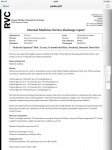
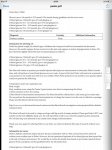
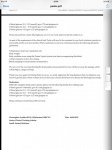
13 Feb - Pedro (UK, RVC trial) eating, back on 0.25U insulin

Status
Not open for further replies.

KleineMue

Member Since 2014
HELP PLEASE!! :(

picked Pedro up from the clinic in London on Friday, bright and happy cat, vocal on the journey home. We stopped at a friends where he came out of the carrier, are a little, sat on a kitchen chair while we chatted, the kids playing.

Pedro has shown to be sensitive to insuline, this is the vets' suspicion, and so they reduced his variable dose again, reducing the maximum dosis from 2 units to 1.25 max:

if blood glucose <10mmol/l, give 0.5 unit glargine s/c
if blood glucose 10.1 - 12.5 mmol/l, give 0.75 unit glargine s/c
if blood glucose 12.6 - 15.5 mmol/l, give 1 unit glargine s/c
if blood glucose >15.6 give 1.25 unit glargine s/c

At my friends I tested him at injection time around 8.30pm (17.7 mmol/L, 319) but forgot the syringes at the clinic, so could not inject him. Tested again when I was home later that evening around 11.30pm and injected him with 1.25 units.

Saturday morning I tested at usual injection time around 8.30am and he was 3.9 mmol/L, 70) and I thought this was probably the end of e nadir. I left Graham with instructions to test him around 10.45am and inject him according to the shooting schedule. At 10.45am he was 4.9 mmol/L, 88) and as per plan he injected him with 0.5 units.

Graham didn't respond to these low numbers with quite the urgency I would have and he didn't test him again until 1.30pm when Pedro was down to 2.3 mmol/L, 41. He noticed that Pedro wasn't interested in food and tried to call me, but my phone was off due to a faulty battery. He tested him again at 3pm (1.5mmol/L 28) and then net to pick me up from work.

We were home 35mins later and I tested him straight away (1.8mmol/L, 43), smeared some honey into his mouth and then tried to get him to eat but to no avail. To make matters worse he ran off and hid and we couldn't work out where he had gone.

Graham found him 35mins later tucked away in a hard to reach spot in the back bedroom and we got him out. Tested again (1.6mmol/L, 29) and took him straight to our vets, had called them earlier.

The nurse noticed him having a tremor and helped us jumpy the cue. Tested him for the vet with our Alphatrak (2.4mmol/L, 43) and they took him to the back to administrat glucose intravenously. 10mins later he was positively more perky, a bit more lively, but happily going into his carrier.

When we got home he was and stayed on 10.3mmol/L 183 at 5.3opm and 7.30pm and at his previous shooting time of 8.30 he was up a little to 10.7mmol/L 193.

As we are approaching the adjusted shooting time I tested him, he has come down a little to 9.9 mmol/L 178, but he still hasn't eaten anything. He drank a tiny amount when we came in from the vets, there are sorts of cat foods there readily available but he showed little interest. We had fish & chips for dinner and he hadn't tiny amount of fish, but nothing more. He spent the evening curled up on the sofa head rest behind me next to the warm heater sleeping with periods of loving and warm cuddles and strokes and purring. He also had a wee in the garden after we have come home from the vets.

So, my question is: to inject or not to inject...? If I would inject him I don't think I would go to sleep because I wouldn't want him to drop low. I am concerned that the glucose injection seemed to see him stuck on that 10.3/183 for several hours without movement. I am concerned he is coming down right now again. My instinct is telling me not to inject.

He has been low before and actually this week Monday night to Tueaday, the night before I dropped him off in London he reached a crazy all time low of 1.8mmol/L 32 and for the first time showed signs of hypoglycaemia. It took all night to get him back up, hence th vets adjusting th variable dose. I am emailing them checking to see if there is a cutoff point, ie no injection if below such and such....
.
I can't get hold of the night nurse at the clinic. :(
What do I do?

Mue x
 
Last edited by a moderator:
After the hypo, he may be more sensitive to insulin. I would be very cautious.

We set a no shot limit of 150 for folks without a lot of data who are using Lantus or Levemir.
When those folks follow the Tight Regulation protocol, they may shoot very low numbers, even under 100 mg/dL (5.5 mmol/L) ... but that is based on a consistent dose plan, not the sliding scale they've had you use. Plus, they are testing at least 4 times a day and recording the data so they can see what a dose will do.

Do you thing you can eyeball a 0.25 unit dose?
 
Last edited:
I would follow your instincts and not inject. As BJ says he may be more sensitive to insulin after the hypo and with him not eating much I don't think it's worth the risk. Re-evaluate at next shot time. :bighug:
 
I was thinking a 0.25 dose as well. Either that or skipping until tomorrow morning. If I heard his meow to complain about wanting to be fed I would be the happiest woman in the world.

The vets at the trial also explained that comparatively Pedro is on very little insulin and that he is at a stage where remission is something that might be possible. We briefly spoke about what that might look like, ie the pancreas waking up and producing insulin, cat shooting low numbers and how careful we will need to be with injections.

We also spoke about how each cat being different it seems for Pedro the Hypo threshold is extremely low, but now that we have reached it (with Monday night's low numbers and different behaviour then already) it means things are more delicate.

:/

He is doing extremely well on the trial, fructosamine coming down further.

Attached his check out report.
 

Attachments

  • image.jpg
    image.jpg
    57 KB · Views: 133
  • image.jpg
    image.jpg
    65.8 KB · Views: 132
  • image.jpg
    image.jpg
    41.1 KB · Views: 125
I replied in your original thread but will say it again here. Whilst the glucose might still be wearing off, he might be more sensitive to insulin because of the low and pedro isn't interested in food I would tend to not give any insulin tonight. But I am not experienced at this so I am not actually advising this I think this is just what I would do .
 
He is come up a wee bit again, 11.2mmol/L (202)

But still not eaten or drunk anything for a while, my gut still says no injection.
Rather have him bouncing high tomorrow morning and meow the house down for food.

Do you think I can "jump" him back to the original 8.30am shooting time if I skip tonight...?
Mue x
 
If you skip tonight, yes - you can absolutely adjust back to your 8:30am shot time tomorrow morning.

You do have to go with your gut sometimes. Even though you probably aren't shooting tonight, it could be interesting and possibly helpful if you grab a test or two anyway - it never hurts to have data.

Are you planning on holding a dose steady? A sliding scale is definitely not appropriate for dosing Lantus, and Lantus definitely works best if you're consistently able to shoot the same dose 12 hours apart - otherwise you really do end up with wonky numbers that are all over the map.
 
Is he interested in eating yet? That would probably be my deciding factor. If he's eating, I'd go for a small dose. If he's not eating, I'd be more cautious.

yes, if you skip tonight's shot, you can shoot at any point after this, so the next shot can be as early as you want.

With a symptomatic hypo he may be extremely sensitive now to the insulin, even a small dose. Those were some very, very low numbers you've gotten.
 
Morning!
He was just 30.9, has been curled up behind me on the sofa all night as far as I can tell, but I did fall asleep... I think the long journey from London back up to home still in my bones. :/

I can't tell if he has eaten much in the night, some food is gone, but of course there are two cats in this household. This morning when I woke up he was happily purring, and letting me stroke him and cuddle, BUT he doesn't meow, barely a sound. And that's extremely untypical for him.

And then just before he threw up a tiny bit of bile (size of a oreo cookie) which looked a little pink, then another smaller bit and that was clear.

Trying again to contact the clinic to see if they can help.
x
 
Tested again at 10.24 am 36.4 mmol/L (655) and I injected him 1.25 units as per schedule, he drank a fair amount of water, sniffed at the food but didn't eat. :/

He is sitting next to me and I can see some of his fur trembling/flickering, like a muscle flicker, a tremor? Can they have tremors when that high? Is he HYPERglycaemic now...? I mean, go into a similar 'shock' situation like HYPOglycaemia, not merely 'diabetes mellitus' Do you know what I mean?

*hits the internet*
 
I think you might be seeing more of a injection irritation. Do you swap testing sites? Remi got it occasionally as if the injection had irritated him.

You are able to watch him closely today? Although he might be high now (maybe a bounce) I think he could still be sensitive to the lantus and go low again. Normally you reduce the dose by 0.25 units if they go low rather than give the same amount as the same thing may well happen again. I think he is needing less insulin overall and perhaps the sliding scale needs to be lowered again.

Please keep a close watch and try to catch the fall early and feed to keep him up.
 
Ok, cat is curled up next to me, happily purring and letting me stroke him, but trembling/shivering. Back to out vet at 12, in an hour, and RVC are trying to get hold of our vets for me.

Could he have an adverse reaction to the insulin overall? Maybe it's the Lantus itself?
 
Keeping a close eye on him, yes, and I hear you about the shooting site. To be honest I am not varying it as much as I guess I could/should. Usually back of the neck and I shift the area a little around, but it's always back of neck. How much do you vary the places where you inject him?

The 1.25 is a reduction from what he would have gotten before, that is already a reduced dose, reduced by 0.25 from what he was on before, hence I went with that.

Will test him again in a second.
He actually stopped trembling now.
 
Just spoke to the clinic and they are forwarding the info to the vets, (which I have done already, but good to have another line of access for sure.) Getting ready for the vets now. Trembling stopped completely (thank goodness for that!!!!!!!) and the vet of the clinic i spoke to reckons it might just be a case of riding this out. The big question is dosage of the insulin and she is checking in with our clinic vets about that.

Asked that our vets give him a checkover to see if he is ok otherwise.
Tested 30mins after insulin injection and he went from 36.4 to 35.5, down a little bit.
Sits happily next to me, watching me type, purring, attentively turning head towards me and all, just not meowing and not eating. :/

on duty vet at clinic said, he probably feels pretty grotty right now, ride it out, check for bugs or anything else that might be off. She also thought the trembling/tremors might have been from sensitivity of the shooting site.

x
 
Glad the trembling has stopped. Others may be better to advise as to what it might be. I too think he must feel pretty rubbish with such large swings of BG in the last few days. Is he drinking okay? If you lift his skin on the back of his neck does it drop back quickly?

Have you tested for ketones recently?
 
Not tested for ketones ever. One of or local pharmacy sells the ketones test strips for our human glucometer, if it's open today I could get them.

Wouldn't be able to get hold of any alphatrak2 specific ones if there are any. Would that work?

Trembling completely stopped but he just got a jolt at the vets because the owner of a little curious Staffie let his dog run around the waiting room and the dog made a beeline for Pedro's basket before I could do anything. Pedro jumped and arched in his cage (glad I took the big one) and growled. Really doesn't need the extra stress. :/

At the clinic in London they have separate waiting area and the cat one has extra screens built in to separate the cats as well!!!!

Vet is running late, woman just came out of a room without her cat, crying. :( :( :(
 
Gave the woman a hug and held her as she was weeping for her cat, she was utterly distraught. Her friend or sister soon came out and they finalised cremation details and all. :(

The vet also agrees with the clinic, there is nothing physically wrong, Pedro appears to be feeling extremely low and poorly after the ups and downs and so recommends to entice him to eat, assisted if push comes to shove and they also gave him subcutaneous water as he was a tad dehydrated.

Waiting to take him home shortly. x
 
Can the vet test for ketones for you? Just in case.

Good to get some strips for home anyway. I only have the ketones strips that you hold uNder the cat whilst they are peeing. Then you read off the colour, like the glucose pee sticks. You can buy blood meter ones but not sure where or if necessary for you.
 
A few months ago I had something similar happen with a man and his lovely old dog. We both ends up crying in the car park and I had only met him a minute before.
 
So we are at +8 now aren't we? Could this be a bounce clearly I wonder? I wonder if the high numbers this morning were a bounce and perhaps he didn't need that whole 1.25.

Don't leave it to go too low. Is he less than 3.8?

Please update your thread title to today's date-low numbers more advice needed. Or something like that
 
Good but you know the drill, don't stop testing as the effect of the honey is likely to wear off and then pedro may drop sharply again. Retest in 20 or thirty minutes.

So here is my concern. I know the trial and the sliding scale but this is what I am struggling with. Pedro went low yesterday on 0.50 of a unit. That would have earned him a reduction of 0.25 unit today. But as he went so low he may well have bounced back high. So when you gave a dose based on that bounce/high number it was actually higher than yesterday's dose. Now that bounce is clearing he has gone very low again so we may be in the same position as yesterday. To my mind no matter how high he is when you next give him a dose I don't think it should be any higher than 0.25. Does that make sense. I am possibly wrong here but I am interested in hearing other peoples opinions.
 
Last edited:
Crikey, that is one heck of a drop! And not for the first time, either.... :nailbiting:

Sarah is right.
Sliding scales are fine and dandy (I use a sliding scale myself with Bert) but a dose increase shouldn't be made on number that is inflated by a bounce. It's not a 'real' number.
Problems can arise, big time, when you shoot the number that you see, and then the bounce starts to clear.
 
I hear you, and I understand what you say, most of what I read about it all goes along with this. Not all cats of the trial are on variable doses, more are on steady doses but those are cats who need larger doses of insulin.

The bounce is a mix of short-acting and long-acting hormones and insulin would still be needed to break the glucose down for the body, maybe what would be Pedro's maximum dose is still too high with 1.25 units. An added complication is that he hasn't eaten today, barely anything, so the 1.25 units this morning will have brought him down off the bounce on a near empty stomach, technically an overdose...?

Our vet today said to keep him above 3.0 and up to 11 would still be fine.
I think I have a night and day of syringe feeding the cat ahead of me, the vet said they could admit him tomorrow to do this but ultimately I can do that myself, no?

Also expecting to hear from Ruth and Chris tomorrow as they were not in the clinic today.

Well, and the other thought of course (I have to put it down somewhere) is Pedro refusing to eat, not wanting to go on, is he giving up, preparing to die? :(
 
No I don't think he is giving up. The clinic gave him the all clear. I think his body is just thinking WTF is going on:eek:. I think its upset his system.

I think you should keep the dose low and consistent for the next few days. Let him ride out the bounces and settle down. All these highs and lows and dose changes don't allow you to see how one dose is actually affecting him.
 
Just saw that you are using Alphatrak meter (reads higher than human meter).
Some of those low readings you've had will have been hypoglycemic numbers.

Definitely time for a rethink about dosing....
I agree with Sarah. It'd be good to cut back on the dose and let things level out for a bit.

Huge hug to you,

Eliz
 
He is not entirely impressed with me syringe feeding him, but another couple syringes worth and a bit of honey after he dropped back to 3.4mmol/L

He seeks warmth, in front of the fire now, licking his fur, a good sign, right?


I think the suggestion of a low dosage (if his blood glucose is not too low) might be a good idea. A cut off point for not shooting is also needed, ie below 5....?
Am putting another update together for Ruth and Chris and will put all that in.

Cancelling work for tomorrow and hope mil can have Josie so I can focus on Pedro.


Thank you for your encouraging word, this really means lots because as I am "force feeding" him I am wondering when/how will his survival instinct kick back in.

He looks bright otherwise, purrs when cuddled, etc.
 
Take a look here and scroll to the bottom section of the first post - you're looking for the video on assist-feeding. Hopefully that will help you. Think of it as assisting him to eat temporarily. You're helping him - if you're feeling like you're forcing him, that will come through and he will pick it up. Remind both of you that this is just for the moment until Pedro's appy kicks back in.

Because you are participating in a research trial, I suspect it would be important to get the ok from the study folks about what you want to do with his dose. Because his appy is uncertain, I'd lean to the conservative side with his dose until he's a little more consistent in eating on his own.
 
Had a couple good feeding sessions with the syringe and he just sat in front of the fire drinking a good amount of water I had dissolved a bit of sugar in as well. Held the bowl high for him and he was drinking while I stroked him. He would stop drinking when I stopped stroking so kept stroking him.

The work I do with newborn and little babies and their parents centres a lot around oxytocin, will do some reading about this in relation to cats. If he feels so grotty then all these things, feeling safe and secure, bonding with me, maslow's hierarchy of needs for cats, etc will sure play a role, no?

Seeing that he is at the lower end right now I don't foresee any injection tonight and I will make sure I have spoken to either Ruth or Chris at the RVC clinic before he would be due an injection tomorrow.
 
I think when you give your update to the RVC trial you should mention that following the advice to shoot up to 1.25 unit if you see higher numbers didn't take into account the bounce that occurred from the very low numbers of yesterday and ask the, whether it is now appropriate to see how pedro settles on a low 0.25 dose for a few days.

I agree with you about setting a no dose shot based upon your alpha trak and also speaking to Ruth or Chris before you dose again. Don't be surprised to see some high readings both from the bounce of going so low. Have the trial seen the tight regulation protocol we follow on here?

You are doing great. Just keeping monitoring and encouraging him. I agree your work is probably helping you greatly. :)
 
How long is the trial?
Hi Ella,
I think the cats are monitored for a year (that's how long the free insulin (and food if wanted)) lasts, as I recall.
A few FDMB members have gone on the trial. And a couple have gone into remission.
They're trialling Prozinc and Lantus.
This is the the first FDMB member whose kitty has been on a sliding scale during the trial.
 
The trial lasts a year, aim being to get cat back into remission where possible. Ruth said at one point when we spoke about the trial's approach that they are likely to take greater risks when shooting than others normally would. I guess that is ultimately what makes it a trial and since lantus is just not licenced for the UK it is trial s and research like this that can contribute to it becoming licenced.

Ruth and Chris know all the current research and studies into feline diabetes and one of the contributing reasons for us to go to a variable dose was the amount of testing I can do at home, a tight regulation schedule as they see it.

Our next visit would be beginning of April, although I'm open to go earlier if I need to. Pedro also had some fairly intense weeks, 5 - 8 jan to and from London, then again two weeks later and again two weeks later. He traveled some 1200 miles since 05 Jan, I twice as much. >.<
 
Do you have any data from the Feb 4-6 time frame, other than what's in there? dosage and preshots even? It might be helpful to have it there.

What we've seen here is that when a cat becomes more used to normal numbers, and their body begins accepting them as normal, it's no longer safe to "shoot through the bounce" meaning to give one more shot at the previous higher dose after a cat has "earned" a dose reduction. I think what you saw happen with this morning's 1.25 is essentially showing that Pedro can't handle the higher dose anymore - it's bringing him straight back down. But . . . I know his appetite is off, so perhaps that is a factor. I'm not sure how to help you since you've got directions for dosing from the trial vets.

He's a well-traveled kitty! Punkin also got to travel for his acromegaly - we took him 2600 miles to and from Colorado to get the tumor radiated. Two days in the car each way - he was a trooper, though. Mostly just hung out under the seat of the car and didn't complain much at all. Good kitties!
 
No petrol allowance, but if you consider the cost for the food, insulin, syringes and most importantly the test strips it works out cheaper for us than NOT being on the trial.

Pedro was diagnosed 13 Nov and between then and travelling to London on 05 Jan we spent about ÂŁ330, and if we would source all needed items online and as cheaply as possible it would still take around ÂŁ130 per month at least. Petrol to and from London = ÂŁ60 x 6 so far ÂŁ360 and now it will space out. In the long run it works out cheaper for us. I won't lie, this was one of the factors that helped us make this decision. That and the chance of remission which we would not have been able to do with support of our vets, although probably with help of this board, mind. ^_^
 
I have so far not let Pedro roam free in the car on our journey but this weekend I opened his cage on the way home from the vet to see what he would do. He was a little curious but mostly sat in his cage anyway.

Thinking how to set up a cat loo so he can access it if needed and comfy spaces to travel. Going through all sorts of cat travel contraptions in my mind while we are on the road...:joyful:
 
Wow, looks like you've been through an emotional ringer the last couple of days.:bighug: I've had to assist feed a foster kitty (hepatic lipidosis) and it can be something you just need to do to get their own system kick started again. I hope Pedro decides food is good again soon. Try to feed something other than his regular food via syringe - they often develop an aversion to the food that is syringed. My foster kitty went completely off chicken for several months. Offer Pedro plates of something completely different.

Pedro has clearly decided he doesn't like as much insulin as he used to. Good plan to skip tonight.

I saw your post on setting up the travel loo. My Neko also went to Colorado for radiation therapy, 4300 km round trip, 3 days on the road each way. I left the carrier door open, and Neko mostly rested in there. I have a sedan with a split back seat, and I put a litter box in the back trunk which she could access through the one seat back down. She mostly used it when we stopped for food, petrol, etc. Of course, I quickly found that puppy pee pads in the carrier and spare towels were handy. :rolleyes: Another arrangement I've seen used is a large dog crate that was enough for a bed, and LB in one.
 
Mue

I know Pedro is on the variable dose trial but I'm wondering if you might want to ask the vets there if it is safe to use the scale when he is bouncing like he is today? I know my mind is trained in the TR protocol where we don't base the dose on the preshot, but I think this can be a learning tool for us all. So it doesn't make sense to me that you have a cat who got as low as he on 1.5u, got no insulin for a few days, then went exceedingly low on 0.5u, skipped (thankfully), and then gave a much higher dose (1.25u) which caused a huge drop again. I don't see the value of this to Pedro. Again....I'm not questioning you following their dosing scale because you are in the trial and you've committed to this. I'm just curious what they will say about this.

I hope Pedro will feel better and eat well.
 
We travel frequently with Rusty. We take his carrier (in case of emergency), but leave the door open. We have a small, oval pet bed that just fits in the carrier and is the same as his bed at home. He usually spends a couple of hours of our 6-hour trip sleeping in his carrier, but he also sits on the arm between the 2 front seats. We pad the arm with a fleece blanket. We have an SUV and carry the litterbox in the back. Never had a problem with the litterbox. We line the back seat area of the car (seat backs are down) with newspaper, in case of a vomit. That way it is easy just to tear off the soiled part of the newspaper and put it in a plastic bag. On long trips we carry Rusty's food in a small cooler. We offer it to him when we stop for a break, but he rarely eats anything during a trip. We also offer him water during a break, but he never drinks.
Cautions: if you have automatic windows, make sure to lock all but the driver's! An ID collar is a good idea. Rusty wears the Road ID plate on his collar. I've had it engraved with his name, our phone numbers, his vet's phone number, and the fact that he is an insulin-dependant diabetic. Here's the link for Road ID:
http://www.roadid.com/default.aspx?...medium=Text&utm_campaign=BikeID&referrer=8942

They ship worldwide. Rusty wears the "Scout Small". It's an engraved plate that fastens on his regular collar. (Edward and I wear Road ID bracelets: they are intended for cyclists and runners, but many people wear them in case of a medical emergency). Not expensive and great peace of mind.

Hope all is going well for Pedro today,

Ella & Rusty
 
Think safety when you travel. Having a pet loose in the car is an invitation to catastrophe if you have to stop suddenly or have an accident. The cat will be flung around the car like a furry, clawed missile and could suffer great injuries. It is the same reason people should wear seat belts.

A 30" crate is about the right size for an average cat to include a modest litter box, a place to lie down, and food and water bowels. Fastening the bowels to the crate will help prevent spills.
 
Take a look here and scroll to the bottom section of the first post - you're looking for the video on assist-feeding. Hopefully that will help you. Think of it as assisting him to eat temporarily. You're helping him - if you're feeling like you're forcing him, that will come through and he will pick it up. Remind both of you that this is just for the moment until Pedro's appy kicks back in.

Because you are participating in a research trial, I suspect it would be important to get the ok from the study folks about what you want to do with his dose. Because his appy is uncertain, I'd lean to the conservative side with his dose until he's a little more consistent in eating on his own.

This has been really useful! Thank you so much!! :)
 
I also wanted to add a word of warning about having cats loose in the car. I took a phone call at work where a women was desperate as she had lost her cat. She had pulled over to help her daughter with something and her cat, who always travelled loose in the back, slipped out. She didn't realise until she got home over 100miles away and by then the cat had long since disappeared and as far as I am aware it was never found :(
 
Status
Not open for further replies.
Back
Top